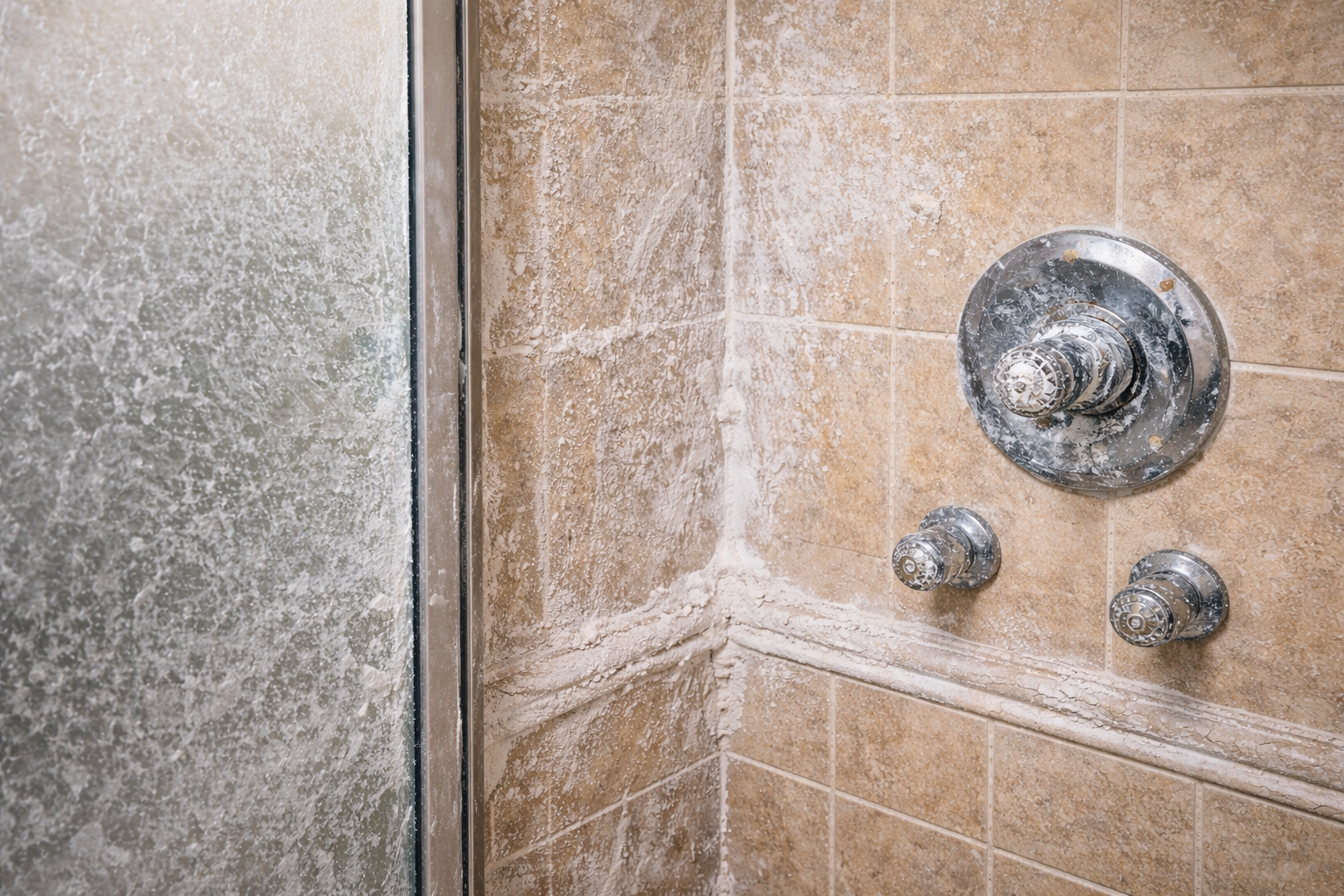
If you live in Upstate New York, there’s a good chance your plumbing deals with more mineral-heavy water than you’d like. Hard water plumbing damage usually starts quietly, with a little white residue here, a slower faucet there, and a water heater that does not seem to recover as fast as it used to. Hard water is simply water with higher levels of dissolved calcium and magnesium, but over time, those minerals can leave scale inside pipes, fixtures, and hot water equipment.
What most homeowners don’t realize is that mineral buildup often hits hot water equipment first. Heat helps those dissolved minerals come out of the water and stick to surfaces, which is why scaling tends to build up fastest around water heaters and other hot-water components. That buildup can restrict flow and reduce heating efficiency.
What hard water is really doing behind the walls
Hard water does not usually cause one dramatic plumbing failure overnight. Instead, it speeds up wear in small, expensive ways. Minerals collect along the inside of plumbing lines, especially where water sits, heats up, or changes direction. As that layer gets thicker, water has less room to move freely.
That is where a lot of common symptoms begin. Low water pressure causes are not always tied to leaks or municipal supply issues. In many homes, especially older ones, scale buildup slowly narrows the inside diameter of pipes and fixture openings until showers, faucets, and appliance supply lines stop performing.
Here’s the thing: plumbing in older Upstate homes may already be working with age, mixed materials, and years of seasonal expansion and contraction. Add hard water to the mix, and components often have to work harder than they should. That can make ordinary wear show up sooner in shutoff valves, faucet cartridges, supply lines, and appliance connections.
Why water heaters take the biggest hit
When people think about hard water, they usually picture spots on dishes or crust around a faucet. The bigger issue is often hidden inside the tank. Mineral buildup in water heaters settles at the bottom of storage tanks and collects on heating surfaces, which can make the system less efficient and less responsive over time. The U.S. Department of Energy recommends routine maintenance, including periodically flushing storage tanks, because sediment buildup affects performance.
In practical terms, that means your water heater may need longer run times to do the same job. You might notice less consistent hot water, popping or rumbling sounds, or higher operating costs without realizing scale is the reason. In a colder climate where water heating already matters for comfort and utility bills, even a modest drop in efficiency can become noticeable pretty fast.
Signs your water heater may be dealing with hard water
- Longer recovery times: Hot water runs out faster or takes longer to come back.
- Tank noise: Sediment can create popping or rumbling as water heats below the buildup.
- Higher energy use: Scale on heating surfaces makes the unit work harder.
- Shorter equipment life: Mineral deposits can add strain to the tank and heating components.
How scaling in pipes affects daily plumbing performance
Scaling in pipes is one of those problems that stays hidden until it becomes disruptive. The inside of the pipe slowly gets rougher and narrower, which can affect everything from shower pressure to how quickly tubs fill. Smaller passages in aerators, showerheads, dishwasher inlets, and washing machine valves can clog even sooner than the main piping.
That is why homeowners often see a pattern instead of one isolated issue. You clean one fixture, then another starts acting up. You replace a faucet cartridge, but the pressure still feels inconsistent. When mineral deposits are building throughout the system, individual fixes help, but they do not always solve the root problem.
Common signs of hard water plumbing damage
- Low water pressure: Scale can restrict flow inside pipes and fixture openings.
- White crust on fixtures: Mineral deposits often show up around faucets and showerheads.
- Appliance strain: Dishwashers, washing machines, and water heaters can all be affected.
- Frequent maintenance needs: Small clogs and worn parts tend to show up more often.
What about pinhole leaks in copper pipes?
Pinhole leaks in copper pipes can happen for more than one reason, including age, water chemistry, and long-term corrosion conditions. Hard water is usually more obvious for the scaling it leaves behind, but when a plumbing system is already aging, mineral-related stress and changing flow conditions can make existing weaknesses more noticeable. In other words, scale might not be the only culprit, but it can absolutely be part of a bigger pattern.
This is one reason older homes deserve a whole-system view. If you only treat the visible symptom, like a clogged showerhead or one failing valve, you may miss the underlying water quality issue that keeps wearing the system down.
What actually helps: limescale removal and prevention
Limescale removal can help in the short term, especially at fixtures and visible surfaces. Cleaning faucet aerators, showerheads, and appliance screens can restore better flow and performance. Flushing a water heater can also help remove sediment before it hardens into a more stubborn layer.
But if hard water is a constant condition in the home, prevention matters more than repeated cleanup. That is where water softener benefits come in. A properly selected treatment setup can reduce the amount of minerals moving through the plumbing system, which can help limit new scale formation. Some homeowners also compare softening systems with high-efficiency water filtration solutions, depending on their goals, whether that is protecting plumbing, improving water feel, or reducing maintenance across fixtures and appliances.
A simple how-to approach for homeowners
1. Look for the early clues
Check faucets, showerheads, and glass surfaces for white residue. Pay attention to longer water heater recovery times, noisy tanks, or steadily dropping pressure at multiple fixtures.
2. Narrow down where the issue shows up
If the problem is only at one faucet, it may be a local clog. If it is happening at several fixtures or mostly on the hot water side, mineral buildup becomes more likely.
3. Handle the easy maintenance first
Clean aerators and showerheads, and have the water heater inspected or flushed if sediment is building up. This can improve performance and give you a better sense of how widespread the problem is.
4. Consider long-term water treatment
If hard water keeps causing repeat issues, a water treatment strategy may save money over time by reducing wear on plumbing and appliances.
When to Bring in a Pro
If hard water symptoms keep coming back, it helps to have someone look at the full picture instead of just the latest symptom. For homeowners in the area, Grasshopper can help you sort out whether you’re dealing with scale buildup, water heater sediment, aging pipes, or a combination of all three. Give us a call at 518-241-1847 or learn more about our water filtration services online.