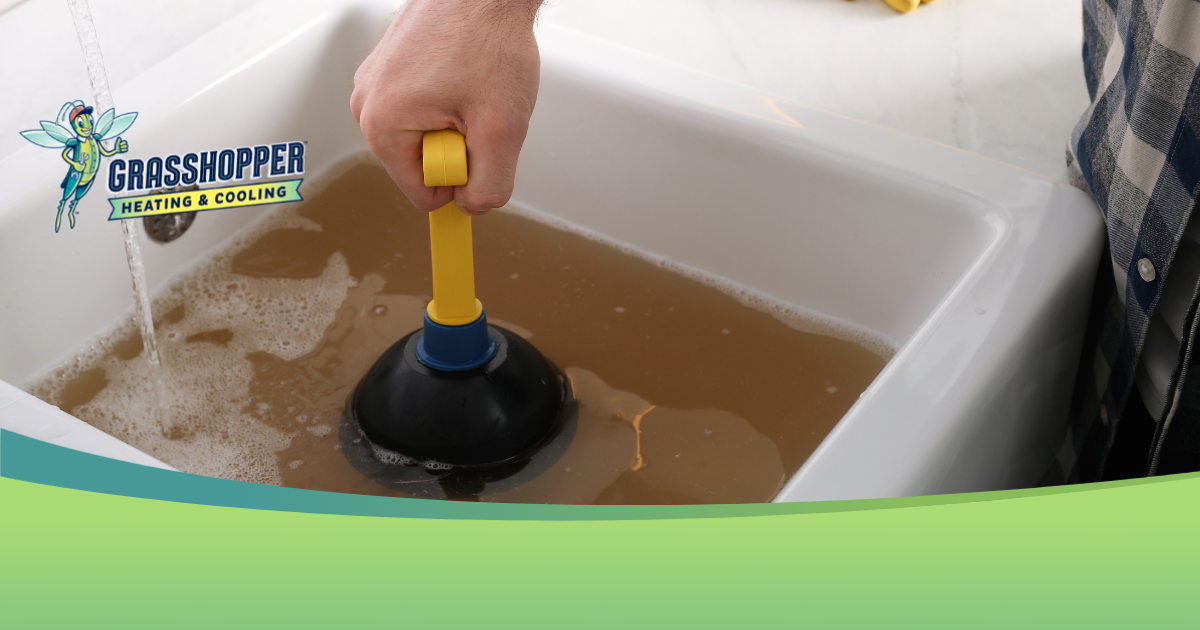
You turn on the kitchen faucet or step into the shower, and within seconds, water starts pooling around your feet. Slow drains are one of the most common plumbing frustrations homeowners face. While a slow drain might initially seem like a minor nuisance, it is often an early warning sign of a developing blockage deep within your plumbing system.
In Upstate New York homes—where hard water mineral scaling accumulates over time and mature tree roots in older Capital Region neighborhoods seek out moisture underground—understanding whether you are dealing with a localized fixture clog or a main sewer line blockage can save you thousands of dollars in water damage repairs. Below is a complete diagnostic guide from the licensed plumbers at Grasshopper Heating, Cooling, Plumbing & Electrical to help you determine what is happening inside your pipes.
Diagnostic Matrix: Partial Clog vs. Main Sewer Line Issue
Search engines and homeowners looking for quick diagnostic clues can use this comparison table to identify where their plumbing issue originates:
| Warning Sign | Localized Partial Clog | Main Sewer Line Blockage | Plumbing Vent Line Blockage |
|---|---|---|---|
| Affected Fixtures | A single sink, shower, or bathtub | Multiple fixtures across bathrooms & floors | Multiple fixtures draining slowly; no backups |
| Fixture Cross-Talk | None (issue is isolated) | Running the washing machine causes toilet to gurgle or shower to back up | Gurgling noises coming from walls or drains when flushing |
| Odors Present | Localized musty or food odors from one drain | Pervasive sewer gas smell in basement or yard | Sewer odors near roof vents or indoor drains |
| Water Receding Speed | Slowly empties over 5–15 minutes | Water stops draining completely or backs up into lowest fixtures | Slow drainage accompanied by heavy bubbling |
| Primary Cause | Hair, soap scum, grease, mineral buildup | Tree root intrusion, bellied pipes, main line debris | Bird nests, leaves, or snow/ice capping roof vents |
1. Signs You Have a Localized Partial Clog
A partial clog occurs when debris adheres to the inner walls of a single branch pipe, narrowing the passage for wastewater without shutting down flow completely.
Key indicators of a isolated partial clog include:
- Single-Fixture Slowdown: Only one specific fixture (such as your master bathroom shower or kitchen sink) drains slowly, while all other sinks and toilets in your home function normally.
- Hair & Soap Scum Accumulation: Bathroom drains frequently capture hair, conditioner, and body fats that form a sticky trap just past the P-trap.
- Kitchen Grease & Mineral Scale: In kitchen sinks, cooking oils combine with calcium and magnesium from regional hard water to create heavy crusts inside supply and branch lines.
Recommended Action: Localized clogs can often be cleared using a manual hand auger (drain snake) or by removing and cleaning the sink P-trap. Avoid using caustic chemical drain cleaners, as harsh acids can corrode metal pipes, damage PVC seals, and fail to clear dense obstructions.
2. Signs You Have a Major Main Sewer Line Issue
Your main sewer line carries all wastewater from your home out to the municipal sewer system or septic tank. When a blockage forms in this primary artery, wastewater has nowhere to go and begins backing up into the lowest drains in your home.
Watch for these severe warning signs of a main sewer line breakdown:
- Multiple Drains Backing Up Simultaneously: If using the kitchen sink causes water to rise in your main floor shower, or flushing the upstairs toilet causes the basement floor drain to bubble, your main line is blocked.
- Gurgling & Water Recirculation: When water tries to push past a main line obstruction, trapped air forces its way back up through secondary fixtures, creating distinct gurgling or bubbling sounds.
- Sewage Odors: A broken or completely clogged main sewer line often allows foul sewer gas (hydrogen sulfide) to leak into your basement, crawlspace, or yard.
- Soggy Patches on Your Lawn: Underground tree root intrusion or collapsed clay sewer pipes can cause wastewater to pool under your grass, creating unusually green, wet patches in your yard.
3. Why Chemical Drain Cleaners Make Plumbing Problems Worse
When faced with a slow drain, many homeowners reach for store-bought liquid drain openers. However, chemical drain cleaners rely on powerful sodium hydroxide or sulfuric acid to dissolve clogs. These chemicals create intense exothermic heat inside your pipes that can:
- Warp or melt thin PVC drain pipes
- Corrode older cast-iron and copper plumbing joints
- Become trapped behind a total blockage, creating a hazardous chemical splash risk for plumbers performing manual repairs
If natural DIY methods—such as flushing with hot water and baking soda—do not resolve the slow drain, professional mechanical clearing is the safest option for your plumbing infrastructure.
4. Professional Solutions for Clearing Stubborn Blockages
When basic plunging and snaking fail to restore proper flow, expert plumbers utilize advanced diagnostic equipment to locate and eliminate the obstruction without damaging your home:
HD Video Camera Line Inspection
A high-definition waterproof sewer camera is fed through your cleanout access point. This provides real-time video footage of the pipe interior, allowing plumbers to pinpoint exact blockages, locate tree root entry points, or spot cracked and sagging (“bellied”) pipe sections.
Commercial Hydro-Jetting Services
For heavy grease buildup, scale, or recurring line obstructions, hydro-jetting technology uses high-pressure water streams (up to 4,000 PSI) to scour the inner walls of your drain lines. Unlike a standard snake that merely punches a small hole through a clog, hydro-jetting completely cleans the pipe diameter, restoring original flow capacity and clearing away root intrusion.
Prevent Major Sewer Backups with Grasshopper Plumbing
Ignoring a slow drain often leads to messy sewage backups and expensive property restoration. At Grasshopper Heating, Cooling, Plumbing & Electrical, our licensed plumbers provide comprehensive drain cleaning services across Clifton Park, Saratoga Springs, Albany, and surrounding Capital Region communities.
Proudly woman-owned and operated since 2016, we maintain a BBB A+ rating, provide transparent flat-rate pricing, and deliver 24/7 emergency plumbing response when you need help most.
Is a slow drain causing trouble in your home? Contact Grasshopper online or call us today at (518) 241-1758 to schedule your drain inspection!