Rated: 4.9 / 5 based on 2,600+ reviews. Read our reviews

Available 24/7! Call now to schedule! (518) 240-9467

Hard Water vs. Your Home: Why Upstate NY Plumbing Ages Faster

If you live in Upstate New York, there’s a good chance your plumbing deals with more mineral-heavy water than you’d like. Hard water plumbing damage usually starts quietly, with a little white residue here, a slower faucet there, and a water heater that does not seem to recover as fast as it used to. Hard water is simply water with higher levels of dissolved calcium and magnesium, but over time, those minerals can leave scale inside pipes, fixtures, and hot water equipment.

What most homeowners don’t realize is that mineral buildup often hits hot water equipment first. Heat helps those dissolved minerals come out of the water and stick to surfaces, which is why scaling tends to build up fastest around water heaters and other hot-water components. That buildup can restrict flow and reduce heating efficiency.

What hard water is really doing behind the walls

Hard water does not usually cause one dramatic plumbing failure overnight. Instead, it speeds up wear in small, expensive ways. Minerals collect along the inside of plumbing lines, especially where water sits, heats up, or changes direction. As that layer gets thicker, water has less room to move freely.

That is where a lot of common symptoms begin. Low water pressure causes are not always tied to leaks or municipal supply issues. In many homes, especially older ones, scale buildup slowly narrows the inside diameter of pipes and fixture openings until showers, faucets, and appliance supply lines stop performing.

Here’s the thing: plumbing in older Upstate homes may already be working with age, mixed materials, and years of seasonal expansion and contraction. Add hard water to the mix, and components often have to work harder than they should. That can make ordinary wear show up sooner in shutoff valves, faucet cartridges, supply lines, and appliance connections.

Why water heaters take the biggest hit

When people think about hard water, they usually picture spots on dishes or crust around a faucet. The bigger issue is often hidden inside the tank. Mineral buildup in water heaters settles at the bottom of storage tanks and collects on heating surfaces, which can make the system less efficient and less responsive over time. The U.S. Department of Energy recommends routine maintenance, including periodically flushing storage tanks, because sediment buildup affects performance.

In practical terms, that means your water heater may need longer run times to do the same job. You might notice less consistent hot water, popping or rumbling sounds, or higher operating costs without realizing scale is the reason. In a colder climate where water heating already matters for comfort and utility bills, even a modest drop in efficiency can become noticeable pretty fast.

Signs your water heater may be dealing with hard water

  • Longer recovery times: Hot water runs out faster or takes longer to come back.

  • Tank noise: Sediment can create popping or rumbling as water heats below the buildup.

  • Higher energy use: Scale on heating surfaces makes the unit work harder.

  • Shorter equipment life: Mineral deposits can add strain to the tank and heating components.

How scaling in pipes affects daily plumbing performance

Scaling in pipes is one of those problems that stays hidden until it becomes disruptive. The inside of the pipe slowly gets rougher and narrower, which can affect everything from shower pressure to how quickly tubs fill. Smaller passages in aerators, showerheads, dishwasher inlets, and washing machine valves can clog even sooner than the main piping.

That is why homeowners often see a pattern instead of one isolated issue. You clean one fixture, then another starts acting up. You replace a faucet cartridge, but the pressure still feels inconsistent. When mineral deposits are building throughout the system, individual fixes help, but they do not always solve the root problem.

Common signs of hard water plumbing damage

  • Low water pressure: Scale can restrict flow inside pipes and fixture openings.

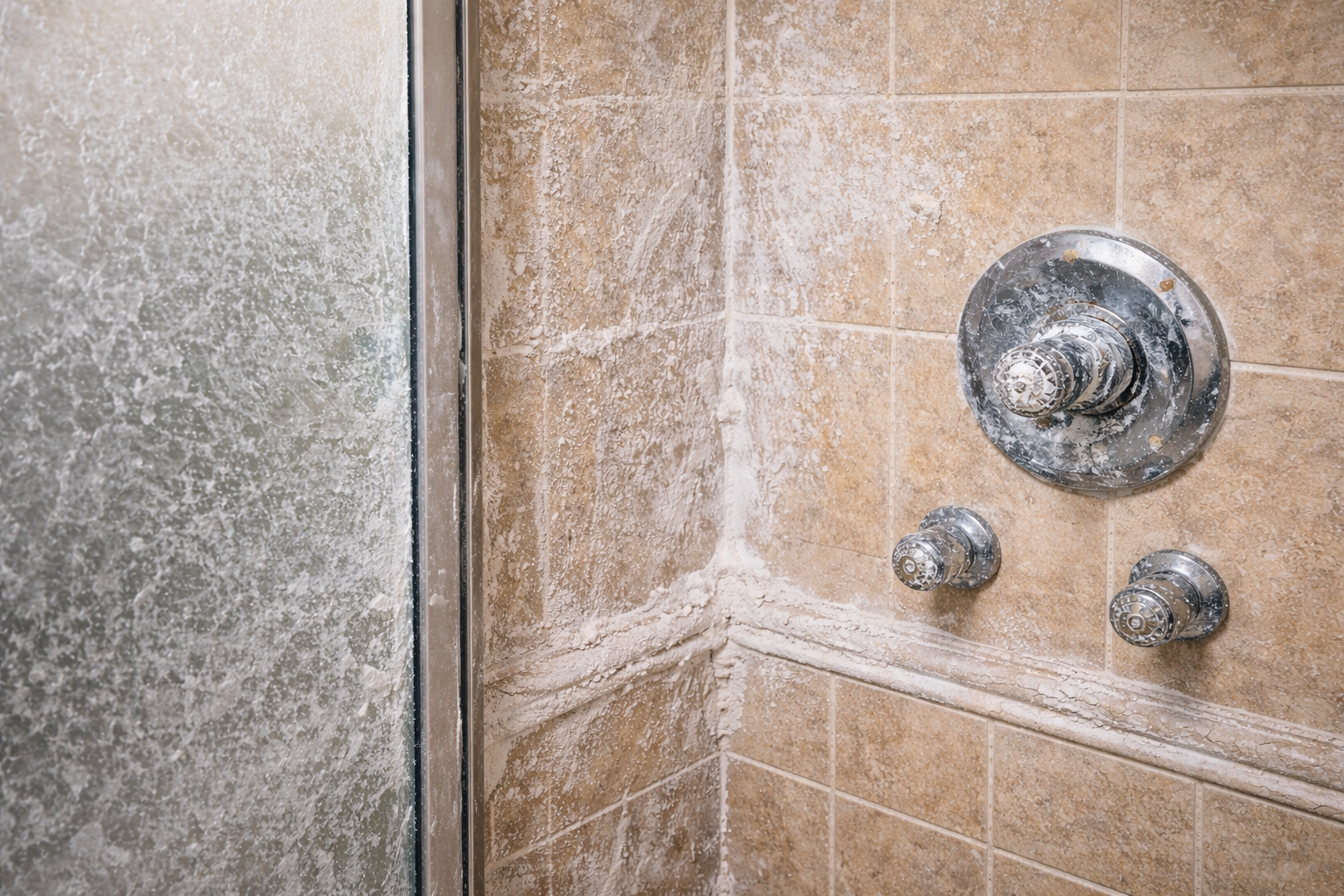
  • White crust on fixtures: Mineral deposits often show up around faucets and showerheads.

  • Appliance strain: Dishwashers, washing machines, and water heaters can all be affected.

  • Frequent maintenance needs: Small clogs and worn parts tend to show up more often.

What about pinhole leaks in copper pipes?

Pinhole leaks in copper pipes can happen for more than one reason, including age, water chemistry, and long-term corrosion conditions. Hard water is usually more obvious for the scaling it leaves behind, but when a plumbing system is already aging, mineral-related stress and changing flow conditions can make existing weaknesses more noticeable. In other words, scale might not be the only culprit, but it can absolutely be part of a bigger pattern.

This is one reason older homes deserve a whole-system view. If you only treat the visible symptom, like a clogged showerhead or one failing valve, you may miss the underlying water quality issue that keeps wearing the system down.

What actually helps: limescale removal and prevention

Limescale removal can help in the short term, especially at fixtures and visible surfaces. Cleaning faucet aerators, showerheads, and appliance screens can restore better flow and performance. Flushing a water heater can also help remove sediment before it hardens into a more stubborn layer.

But if hard water is a constant condition in the home, prevention matters more than repeated cleanup. That is where water softener benefits come in. A properly selected treatment setup can reduce the amount of minerals moving through the plumbing system, which can help limit new scale formation. Some homeowners also compare softening systems with high-efficiency water filtration solutions, depending on their goals, whether that is protecting plumbing, improving water feel, or reducing maintenance across fixtures and appliances.

A simple how-to approach for homeowners

1. Look for the early clues

Check faucets, showerheads, and glass surfaces for white residue. Pay attention to longer water heater recovery times, noisy tanks, or steadily dropping pressure at multiple fixtures.

2. Narrow down where the issue shows up

If the problem is only at one faucet, it may be a local clog. If it is happening at several fixtures or mostly on the hot water side, mineral buildup becomes more likely.

3. Handle the easy maintenance first

Clean aerators and showerheads, and have the water heater inspected or flushed if sediment is building up. This can improve performance and give you a better sense of how widespread the problem is.

4. Consider long-term water treatment

If hard water keeps causing repeat issues, a water treatment strategy may save money over time by reducing wear on plumbing and appliances. 

When to Bring in a Pro

If hard water symptoms keep coming back, it helps to have someone look at the full picture instead of just the latest symptom. For homeowners in the area, Grasshopper can help you sort out whether you’re dealing with scale buildup, water heater sediment, aging pipes, or a combination of all three. Give us a call at 518-241-1847 or learn more about our water filtration services online. 

Purify Your Home Water Supply with HALO Water Filtration Products

Grasshopper Heating & Cooling is proud to offer some of the most effective whole-home water filtration systems on the market. Tap water can contain many unwanted compounds. For example, it may have 3-4 times more chlorine than pool water. You wouldn’t bathe or brush your teeth with pool water, so why would you take a chance with municipal water with an even higher concentration of potentially harmful chemicals?

What’s In Your Water?

Water utilities often add chlorine as a disinfectant. It’s considered generally safe at low levels but can give water an undesirable taste or odor. Grasshopper can check your water supply to see if higher levels of chlorine or other contaminants are present. These can include:

  • Hard Water Minerals: Minerals in the water, like calcium and magnesium, aren’t a health risk, but they can cause limescale to form in pipes, which can damage your plumbing. They can also leave stains on dishes, silverware, and clothes.
  • Heavy Metals: Lead and other heavy metals from old pipes can leach into your water supply. Children are especially vulnerable to lead exposure. Many home water filtration systems can remove heavy metals.
  • Arsenic: If you use well water, low levels of arsenic may be present. High levels of arsenic have been linked to reduced brain function in children as well as diabetes, heart disease, and cancer. If you have concerns, Grasshopper can test your water supply.

Tap water can also contain aluminum, copper, and iron as well as pesticides. Traces of plastic waste, harmful chemicals, and even radioactive compounds have been identified in municipal water sources.

Let Grasshopper Help Purify Your Water

We offer various solutions to make municipal water safe for your household. Some can even reverse the damage caused by hard water and help protect the environment. You can save money on plastic bottles and protect the environment by not having to throw them away. The HALO products we offer give you great-tasting, highly filtered alkaline water for just pennies per day (meanwhile, a jug of bottled water can cost several dollars, so you end up spending hundreds of dollars a year on water).

By investing in a whole-home water purification system, you can have water that matches the formulation of that found in Blue Zones. These are regions where people often live into their 90s and beyond. You too can have the same quality water for cooking and drinking and reduce your risk for disease.

Enjoy the Benefits of HALO Water Filtration

Many households rely on salt-based water softeners. Their backwash can produce a toxic sludge that pollutes septic systems and the environment. We can install an environmentally safe technology that eliminates pouring bags of salt into your water softener. This fully warrantied, space-age technology can last for 25 years and includes:

H2 ZERO

The H2 ZERO is a two-tank system. Tank 1 contains High Activity Carbon that effectively removes chlorine and purifies water at a range of pH levels. It yields clean, fresh water that’s free of any strange tastes or odors. For Tank 2, there are a couple of options. You can choose a HALO ION In-line Water Conditioner that uses magnetic fields to alter the molecular structure of calcium and magnesium so minerals remain suspended in water. A scale media option with no salt is also available.

HALO ION 2.0

The HALO ION 2.0 In-line Water Conditioner is installed in line with existing pipes. Its multi-reversing polarity magnetic fields help keep dissolved minerals suspended so they don’t contribute to limescale and corrosion. The system does not require a drain line and no electricity or chemicals are needed for it to work. It is available in several different sizes to meet the needs of your home, in flow rate capacities from six to 50 gallons per minute.

Contact Grasshopper Heating & Cooling

We’re proud to offer advanced whole-home water filtration systems in and around Clifton Park, NY. These include the H2 ZERO and HALO ION 2.0, which our technicians are experienced in installing to help protect your health and plumbing system. Contact us to learn more about these and other products that can also remove plastics, metals, chemicals, and other common tap water pollutants. To have your questions answered by a friendly, knowledgeable representative, and to schedule your in-home evaluation and free estimate, call (518) 241-1762 today.

Does My Water Filtration System Need to Be Repaired or Replaced?

Does My Water Filtration System Need to Be Repaired or Replaced?

Knowing when to replace your home water filtration system will ensure you continue to benefit from good water quality. Whole house systems are complex. Although they can be repaired, there are signs your system is no longer functional and must be replaced to ensure sediment, minerals, rust, chemicals, odors, and microbes are removed from your water supply. Here are signs you should call us for whole home water filtration installation.

Dirty Water

If you have a whole-home water filter and tap water appears discolored or has pieces of dirt, debris, mineral scale, or rust particles, your filtration system isn’t doing its job. Consult with a plumber to determine the next steps. They’ll tell you if the whole system must be replaced. Other options include replacing the pre-sediment filter, which should be done every 3 to 6 months. Sub-micron-post filters (in systems that have them) can last up to 12 months.

Unpleasant Odors

If the water smells like rotten eggs or chlorine, assume it’s unsuitable for drinking. Your water filtration system isn’t removing the compounds it is supposed to. A professional will determine if part or all of the system has gone bad. An unpleasant smell can be due to a relatively minor issue like a clogged filter or a major fault in the system.

Poor Tasting Water

If your water doesn’t taste right, there’s likely a significant filtration problem. The difference in taste may be subtle at first. But any change in taste can mean the filtration system is contaminated with bacteria or isn’t working at all. Call a technician if the water starts to taste bitter, tart, metallic, or otherwise unpleasant, and replacing the filter doesn’t resolve the issue. 

Unusual Sounds

When you turn on the faucet and hear what sounds like a labored water pump, the filtration system may be breaking down. The sound may occur intermittently or be persistent. If the system is several years old, it likely needs to be replaced.

Low Water Pressure

A drop in water pressure can be due to a clogged filter. If so, then replacing the filter should restore normal pressure. But if a new filter doesn’t resolve the issue, the filtration system or your plumbing may be leaking. Call a professional to assess the problem and determine if you need a new water filtration system or a plumbing repair.

Water Has a Slippery Feel

If too much sodium is added to your water, it will feel slippery. Soft water has a high sodium and potassium ion content. Call a technician if the water doesn’t feel right on your skin. An improper balance of sodium ions, which are used to exchange calcium and magnesium ions in hard water, can mean your filtration system is near the end of its life.

What Affects My Water Filtration System’s Lifespan?

The water quality in your area can affect the life of your system. For example, the more contaminated the water supply, the harder the filtration system must work. Daily water consumption is another factor, especially with the lifespan of a whole house water filter tank. A tank rated for 300,000 gallons of water lasts about three years; a 1,000,000-gallon-rated tank should be replaced every 10 years. 

The type of filtration system is also a factor. Check with the manufacturer as to when to expect to replace your water filtration system. Maintenance is a consideration as well; if you haven’t kept up with routine care, such as replacing filters, your filtration system won’t last as long.

Contact Grasshopper Heating & Cooling

Our water filtration specialists can check your system and determine whether it should be repaired or replaced. We install and service the industry’s leading whole-home water filtration systems, including Halo products. To request service, learn more about our products and financing options, or receive a free estimate, call (518) 216-0051.