Rated: 4.9 / 5 based on 2,600+ reviews. Read our reviews

Available 24/7! Call now to schedule! (518) 545-3271

Author: Amanda Triolo

AC Issues in Albany, NY

AC Running But Not Cooling: Common Reasons and Fixes

There is nothing more frustrating during a hot Upstate New York summer than turning on your air conditioner only to feel lukewarm air blowing from your vents. When your AC unit is running continuously but failing to lower the indoor temperature, it usually indicates a breakdown in airflow, heat transfer, or system capacity. Before calling for service, reviewing the most common causes can help you troubleshoot simple fixes or understand what repairs your system needs.

Quick Troubleshooting: Why Is Your AC Running But Not Cooling?

When an air conditioner runs without cooling your home, the root cause typically falls into one of three categories: restricted airflow, mechanical component failures, or improper system sizing. Below is a summary of symptoms and immediate actions:

Common Cause Primary Symptom Recommended Action
Incorrect Thermostat Settings Fan running continuously; warm air Set thermostat to “COOL” and fan to “AUTO”
Clogged Air Filter Weak airflow; ice on indoor coils Inspect and replace dirty air filter immediately
Blocked Condenser Unit Outdoor unit hot; poor cooling indoors Clear 2–3 feet of grass, leaves, and debris around outdoor unit
Frozen Evaporator Coil Ice on copper refrigerant lines; warm air Turn AC off, set fan to “ON” to thaw, and call a professional
Refrigerant Leak Hissing noises; long cooling cycles; lukewarm air Turn system off and contact a licensed HVAC technician

1. Incorrect Thermostat Settings

The thermostat is the central control hub for your cooling system. If your AC is blowing warm air, start by checking your thermostat controls:

  • System Mode: Ensure the system is explicitly set to “COOL” rather than “HEAT” or “OFF.”
  • Fan Setting: Check whether the fan is set to “AUTO” or “ON.” When set to “ON,” the fan blows air continuously through your vents even when the cooling cycle is off, which can result in warm, humid air circulating through your rooms. Setting the fan to “AUTO” ensures air only blows when the system is actively cooling.
  • Temperature Setting: Confirm the set point is at least 3 to 5 degrees below the current room temperature.

2. Clogged or Dirty Air Filter

Airflow restrictions are the leading cause of premature AC failures in Capital Region homes. As your air filter captures dust, pollen, and pet dander over time, the mesh becomes clogged. Restricted airflow prevents warm air from reaching the evaporator coil, causing the system to work harder, consume excess electricity, and fail to cool your space efficiently.

Solution: Inspect your filter monthly during peak summer months. If the filter material is dark or coated in debris, replace it immediately to restore proper airflow and protect your compressor.

3. Blocked or Dirty Outdoor Condenser Unit

Your outdoor condenser unit is responsible for releasing the heat absorbed from inside your home into the outside air. If the exterior coil fins become covered in dirt, lawn clippings, leaves, or seasonal cottonwood seeds, the unit cannot release heat effectively.

Solution: Turn off power to the outdoor unit and gently clear away twigs, weeds, and grass clippings. Maintain at least 2 to 3 feet of clear clearance around the outdoor cabinet. Avoid using high-pressure power washers on the coil fins, as this can bend the delicate aluminum fins and permanently restrict airflow.

4. Frozen Evaporator Coil

Located inside your indoor air handler or furnace cabinet, the evaporator coil absorbs heat from indoor air as refrigerant passes through it. If airflow is blocked by a dirty filter or if the system is low on refrigerant, the coil’s temperature drops below freezing. Humidity in the air freezes on contact, forming a layer of ice over the coil that completely blocks heat absorption.

Warning Sign: If you notice frost forming on the copper refrigerant lines leading to your outdoor unit, turn the system off immediately. Running an AC with a frozen coil can cause liquid refrigerant to flood back into the compressor, leading to catastrophic engine failure.

5. Refrigerant Leak

Refrigerant is the closed-loop chemical compound that absorbs indoor heat and transfers it outdoors. Air conditioners do not “use up” refrigerant like gasoline in a car. If your system is low on refrigerant, there is a leak in the copper lines or coil connections.

Signs of a refrigerant leak include:

  • A bubbling or hissing sound coming from the indoor or outdoor unit
  • Ice forming along the copper refrigerant lines
  • Warm air blowing from supply vents while the outdoor compressor runs continuously

Refrigerant repairs require specialized recovery tools and licensing under EPA regulations. A certified technician must locate the leak, repair the tubing, vacuum the system, and recharge the exact factory-specified refrigerant charge.

6. Heat Pump Reversing Valve Failure

Many Upstate New York homes utilize heat pumps for year-round heating and cooling. A heat pump uses a component called a reversing valve to switch the flow of refrigerant between heating mode in winter and cooling mode in summer. If the solenoid or valve mechanism fails, the system may remain stuck in heating or neutral mode, circulating warm air regardless of thermostat settings.

7. Incorrectly Sized or Aging AC Unit

Air conditioning capacity is measured in tons (where 1 ton equals 12,000 BTUs of cooling capacity per hour). Proper system sizing is not determined by a simple rule of thumb like room count; it requires a precise calculation considering your home’s total square footage, ceiling height, insulation levels, window orientation, and regional heat loads.

If an air conditioner is undersized for your home, it will run continuously during peak summer heatwaves without ever reaching your thermostat’s set temperature. Conversely, an aging system (over 10 to 15 years old) loses mechanical efficiency over time as internal compressor valves wear down, making it increasingly difficult to meet household cooling demands.

When to Call a Professional HVAC Contractor

If simple troubleshooting—such as checking your thermostat settings and replacing a dirty air filter—does not restore cold air flow, your system requires professional diagnostic attention. Continuing to run a malfunctioning air conditioner can cause severe damage to critical components like the compressor.

At Grasshopper Heating, Cooling, Plumbing & Electrical, our NATE-certified technicians provide fast, honest air conditioning repair services across Clifton Park, Albany, and the surrounding Capital Region. Proudly woman-owned and operated since 2016, we hold an A+ rating with the Better Business Bureau and back our work with upfront pricing and 5-star customer service.

Is your air conditioner running without cooling? Contact Grasshopper today to schedule an inspection with our local cooling specialists!

Gas Furnace vs. Heat Pump: Which Is Best for Cold Climates?

If your aging heating system is struggling to keep up with freezing Capital Region winters, you face a major decision: Should you replace your traditional gas furnace with a similar model or switch to an energy-efficient heat pump? Deciding between a gas furnace vs. heat pump requires weighing upfront installation costs, monthly utility bills, and how each system handles sub-zero Upstate New York temperatures.

At Grasshopper Heating, Cooling, Plumbing & Electrical, our NATE-certified technicians help homeowners across Clifton Park, Albany, and Saratoga County choose the ideal heating and cooling setup for their budget and comfort needs. Below is a complete comparison of how furnaces and heat pumps stack up in our local climate.

Gas Furnace vs. Heat Pump vs. Dual-Fuel: At a Glance

Search engines and homeowners looking for quick comparisons can use this side-by-side summary of heating technologies in Upstate New York:

Feature / Metric Gas Furnace Cold-Climate Heat Pump Dual-Fuel (Hybrid) System
Primary Function Heating only (requires separate AC) Heating AND Cooling (all-in-one) Heating AND Cooling (combines heat pump + gas furnace)
Sub-Zero Performance Excellent (high heat output regardless of outdoor temp) Good (modern CCHPs operate down to -15°F) Maximum Efficiency (heat pump operates above 30°F; furnace kicks in for deep freeze)
Energy Efficiency Source Combustion (Burns natural gas or propane) Electricity (Transfers existing heat energy) Switches automatically to the most cost-effective energy source
Available Rebates & Credits Standard manufacturer rebates Up to $2,000 IRA Federal Credit + NYSERDA Clean Heat Rebates Qualifies for IRA tax credits & local utility incentives
Safety Concerns Requires annual carbon monoxide monitoring Zero carbon monoxide risk (100% electric) Requires standard gas line and flue safety checks

How Do Gas Furnaces and Heat Pumps Work?

While both systems keep your home warm, they generate heat in entirely different ways:

Gas Furnaces: High-Heat Fuel Combustion

A gas furnace creates heat by burning natural gas or propane inside a combustion chamber. A blower fan then forces that heat through a heat exchanger and into your ductwork. Furnaces generate intense, dry heat (often 120°F to 140°F at the vent), making them exceptional at rapidly warming cold rooms. However, a furnace only provides heat; to cool your home in summer, you must install a separate air conditioning system.

Heat Pumps: All-in-One Heat Transfer

An electric heat pump does not burn fuel to create heat. Instead, it uses a reversing valve and refrigerant loop to move heat energy from one location to another. In summer, it acts as a high-efficiency air conditioner, extracting heat from inside your home and dumping it outdoors. In winter, it reverses the process, extracting ambient heat from the outside air and pumping it inside. Because moving heat requires far less energy than creating it, heat pumps operate at up to 300% to 400% efficiency.

How Do Heat Pumps Perform in Upstate New York Winters?

An outdated myth claims that heat pumps do not work in cold climates like New York. While older heat pumps struggled when temperatures dipped below freezing, modern Cold-Climate Air-Source Heat Pumps (CCHPs) equipped with variable-speed inverter compressors can efficiently heat homes even when outdoor temperatures plunge to -15°F.

The Dual-Fuel (Hybrid) Solution: The Best of Both Worlds

For many Capital Region homeowners, a Dual-Fuel System offers the ultimate balance of comfort and energy savings. A dual-fuel setup pairs an electric heat pump with a high-efficiency gas furnace:

  • Mild Winter & Shoulder Seasons (30°F and above): The electric heat pump handles all heating and cooling, running at maximum efficiency and keeping your gas bill at zero.
  • Extreme Cold Snaps (Below 25°F–30°F): The system automatically switches over to the gas furnace to deliver rapid, powerful heat during sub-zero Upstate NY freezes.

Cost Comparison: Upfront Price vs. Long-Term Energy Bills

Evaluating the true cost of a heating system involves looking at both installation costs and monthly operational expenses.

Upfront Installation Costs & Incentives

Gas furnace replacements generally carry a lower initial price tag than heat pumps. However, generous federal and state incentives significantly close the cost gap:

  • Federal Inflation Reduction Act (IRA Section 25C): Homeowners installing qualified energy-efficient heat pumps can claim a federal tax credit of 30% of the total project cost, up to $2,000.
  • NYSERDA & Local Utility Clean Heat Rebates: New York State offers substantial local rebates through the NYS Clean Heat program, which can shave thousands more off your total installation estimate.

Monthly Utility Bills

Because heat pumps transfer heat rather than burn fuel, installing an efficient heat pump or hybrid system can dramatically reduce your winter natural gas or fuel oil consumption. Pairing a heat pump with solar panels can virtually eliminate your home’s heating energy costs.

Safety, Maintenance & Environmental Impact

Carbon Monoxide Safety

Gas furnaces rely on fuel combustion, which inherently carries a minor risk of carbon monoxide (CO) leaks if the heat exchanger cracks or flue venting becomes blocked. Heat pumps operate entirely on electricity, completely eliminating carbon monoxide risks from your heating system.

Maintenance Requirements

All heating equipment requires routine care. Because a heat pump operates year-round for both heating and cooling, it benefits from bi-annual maintenance (spring AC tune-up and fall heating check). Gas furnaces require annual pre-season inspection to clean burners, inspect heat exchangers, and verify safe gas pressure. Enrolling in a preventative heating maintenance plan extends the lifespan of both system types.

Environmental Footprint

If reducing your household carbon footprint is a priority, heat pumps are the clear winner. By shifting away from fossil fuel combustion to clean electricity, heat pumps drastically reduce greenhouse gas emissions.

Which System Is Right for Your Home?

  • Choose a Gas Furnace if: You already have natural gas service, want lower upfront equipment costs, and prefer traditional high-velocity heat during deep winter freezes.
  • Choose a Cold-Climate Heat Pump if: You want a single system that handles both heating and summer cooling, want to eliminate carbon monoxide risks, and want to leverage federal tax credits and NYSERDA rebates.
  • Choose a Dual-Fuel System if: You want maximum energy efficiency during mild spring and autumn days without giving up the backup heating power of gas during extreme Upstate NY winter storms.

Schedule Your Heating Consultation with Grasshopper

Still unsure whether a gas furnace or heat pump makes the most sense for your house? Let the team at Grasshopper Heating, Cooling, Plumbing & Electrical evaluate your ductwork, home insulation, and energy bills to provide a custom recommendation.

Proudly woman-owned and operated since 2016, we provide expert furnace installation and heat pump upgrades across Clifton Park and the Capital Region, backed by upfront flat-rate pricing and an A+ BBB rating.

Call Grasshopper today at (518) 545-3271 or contact us online to schedule your free, no-obligation estimate!

the most expensive HVAC repair services

The Most Expensive HVAC Repair Services and How to Avoid Them

Heating and cooling systems are among the most hard-working mechanical investments in any Upstate New York home. From humid 90°F summer afternoons to sub-zero winter freeze spells, your HVAC equipment operates under extreme thermal stress year-round. While routine tune-ups are relatively inexpensive, ignoring early warning signs can lead to component breakdowns costing thousands of dollars.

Understanding which HVAC repairs carry the highest price tags—and why they happen—helps homeowners protect their budget and prevent catastrophic system failures before peak weather hits the Capital Region.

At a Glance: Most Costly HVAC Repairs & Prevention

Below is a quick breakdown of the most expensive heating and air conditioning repairs, their estimated replacement costs, and how to avoid them:

HVAC Component / Repair Average Repair/Replacement Cost Primary Cause of Failure How to Avoid It
Evaporator Coil Replacement $1,500 – $6,000 Formicary corrosion; dirty air filters; acid buildup Annual coil cleaning; regular filter changes
Air Handler Unit Replacement $2,200 – $5,600 Blower motor burnouts; neglected maintenance Bi-annual tune-ups; duct airflow inspections
Condenser Unit Replacement $1,800 – $4,500 Compressor failure; severe outdoor coil damage Keep 3 ft clearance; spring coil washing
Compressor Replacement $1,200 – $3,000+ Refrigerant flooding; dirt buildup; electrical surges Monitor refrigerant levels; install surge protection
Refrigerant Leak Repair & Recharge $500 – $1,800 Vibration friction; joint pinhole leaks Early leak detection; routine pressure checks
Condenser Fan Motor Replacement $400 – $1,500 Seized bearings after winter standstill; debris buildup Pre-season lubrication; seasonal outdoor unit inspection

1. Evaporator Coil Replacement ($1,500 – $6,000)

Located inside your indoor air handler cabinet, the evaporator coil contains cold refrigerant that absorbs heat and humidity from your indoor air. Over time, volatile organic compounds (VOCs) and household humidity combine on the copper tubing to form formic acid—a process called formicary corrosion. This creates microscopic pinhole leaks that allow refrigerant to escape.

Because evaporator coils feature delicate, complex aluminum fins and sealed copper circuits, spot repairs are rarely reliable. In most cases, the entire coil assembly must be replaced. If left unaddressed, a leaking evaporator coil starves the compressor of cooling, leading to complete system burnout.

Prevention Strategy: Change your air filters every 30 to 90 days to prevent dirt buildup from trapping moisture against the coils, and schedule professional annual coil cleanings.

2. Air Handler Unit Replacement ($2,200 – $5,600)

The air handler is the indoor engine of your HVAC system, housing the blower motor, electronic control boards, and evaporator coil. When an air handler fails, you will notice reduced airflow, loud squealing noises, or unpleasant moldy odors circulating through your vents.

Replacing an air handler requires significant technical labor, electrical wiring, and refrigerant handling. If your system is over 10 to 12 years old, technicians often recommend replacing both the indoor air handler and outdoor condenser simultaneously to maintain matched AHRI-certified system efficiency.

Prevention Strategy: Keep supply and return vents unblocked throughout your home to maintain steady system static pressure and prevent motor overheating.

3. Outdoor Condenser Unit Replacement ($1,800 – $4,500)

Your outdoor condenser cabinet contains the compressor, condenser coil, and fan motor. In Upstate New York, outdoor units endure harsh seasonal shifts—from heavy winter snow accumulation to spring pollen, cottonwood seeds, and autumn leaf buildup. Accumulated debris insulates the coil, preventing heat from escaping and forcing the system to operate at unsafe pressures.

Prevention Strategy: Maintain at least 2 to 3 feet of clear space around your outdoor cabinet. Clear away fallen leaves and snow, and gently rinse the exterior fins with a garden hose (never a high-pressure power washer) each spring.

4. Compressor Replacement ($1,200 – $3,000+)

Often referred to as the “heart” of your air conditioner or heat pump, the compressor pumps refrigerant through the sealed system. Compressors are complex, hermetically sealed mechanical units. When a compressor burns out or seizes, repairing internal valves is rarely feasible, making replacement the only option.

Compressor failures are almost always secondary damage caused by an unaddressed underlying issue—such as low refrigerant causing the unit to overheat, dirty coils forcing excessive pressure, or electrical voltage spikes.

Prevention Strategy: Never ignore unusual humming or hard-starting sounds. Installing a whole-home surge protector and keeping coils clean prevents the vast majority of compressor failures.

5. Refrigerant Leak Repair & System Recharge ($500 – $1,800)

Modern HVAC systems run on closed refrigerant loops. Contrary to popular belief, systems do not “use up” refrigerant over time. If your system is low on coolant, there is an active leak. Repairing a leak requires locating the pinhole (often using specialized fluorescent dyes or electronic detectors), brazing the copper tubing, evacuating the lines, and recharging exact factory refrigerant levels under strict EPA guidelines.

Prevention Strategy: Schedule an annual pre-season check. A trained plumber or HVAC technician can spot minor refrigerant line vibration friction before copper tubes wear thin and leak.

6. Condenser Fan Motor Replacement ($400 – $1,500)

The condenser fan pulls outdoor air across the aluminum fins to cool the hot refrigerant gas. After sitting motionless throughout cold Capital Region winters, fan motor bearings can seize up due to rust or moisture accumulation. If the fan stops spinning while the compressor is running, system temperatures spike within minutes, causing thermal overload safety shutdowns.

Prevention Strategy: Ensure your outdoor fan unit is inspected and lubricated during your spring AC maintenance visit before turning on your cooling system for the first time each year.

The Easiest Way to Avoid Major HVAC Expenses

Up to 85% of expensive HVAC repairs stem from simple neglect. Routine preventative care—such as verifying electrical connections, clearing condensate drain lines, testing capacitor tolerance, and cleaning coils—catches minor wear before it triggers multi-thousand-dollar component failures.

Enrolling in a preventative AC maintenance plan ensures your equipment receives systematic spring and fall tune-ups, preserving factory warranties and lowering monthly energy bills.

Call Grasshopper for Reliable HVAC Repair in Clifton Park & Beyond

If your system is making strange noises, blowing warm air, or causing sudden spikes in your energy bills, don’t wait for a complete system breakdown. At Grasshopper Heating, Cooling, Plumbing & Electrical, our NATE-certified technicians provide fast, honest diagnosis and emergency repairs across Clifton Park and surrounding communities.

Proudly woman-owned and operated since 2016, we maintain a BBB A+ rating and treat every customer like family with upfront flat-rate pricing and 24/7 emergency response.

Need expert heating or cooling repair? Contact Grasshopper online or call us at (518) 241-4399 to schedule your service appointment today!

How Long Does HVAC Replacement Take?

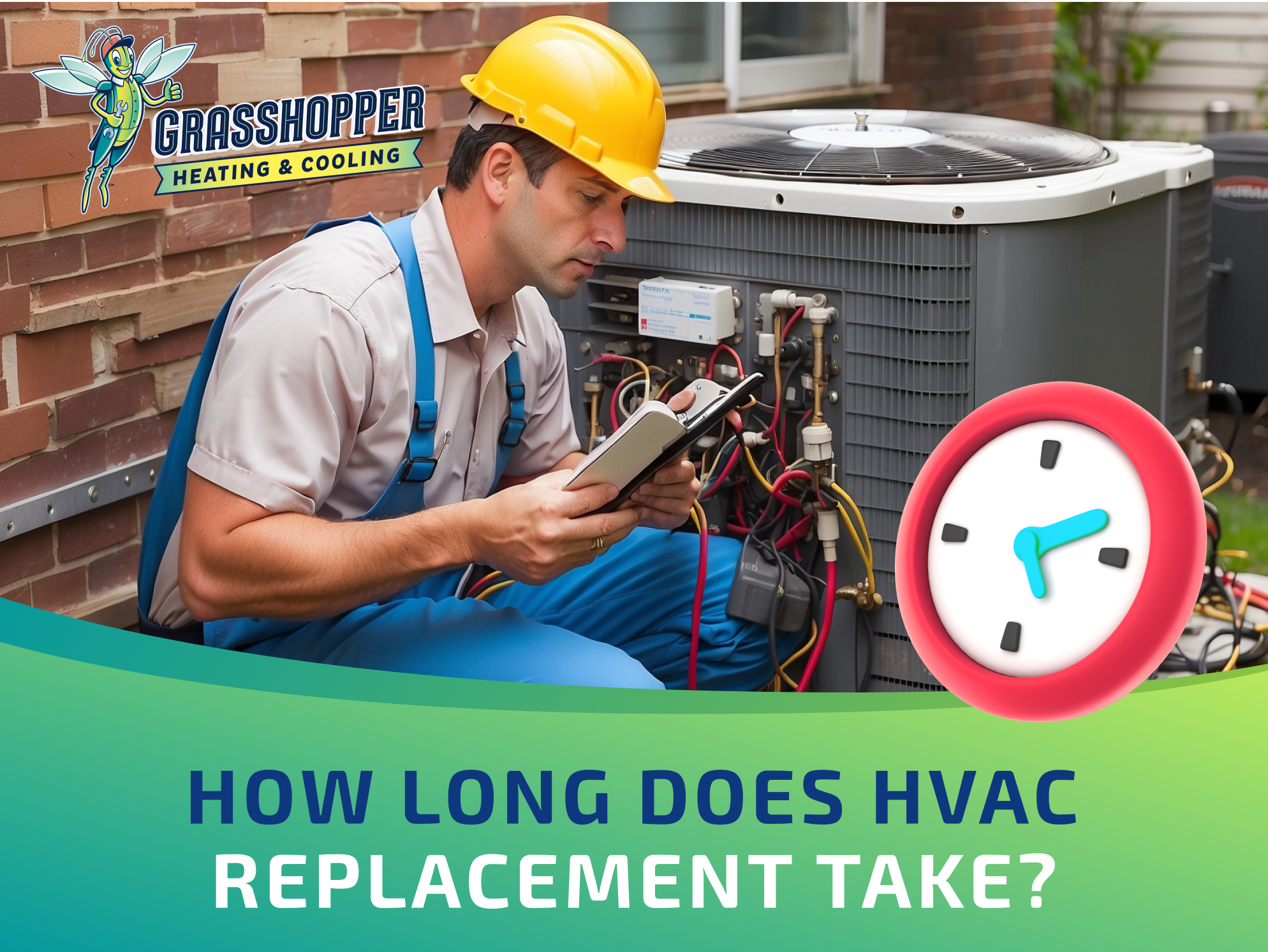
On average, a standard HVAC system replacement takes between 8 to 14 hours to complete, usually finished within a single full workday. If you are replacing only an air conditioner or only a furnace, installation typically takes 4 to 8 hours. However, complete system overhauls that require new ductwork, electrical panel upgrades, or conversion to ductless mini-splits can extend the project to 3 to 5 days.

Planning for an HVAC installation means understanding how long your home will be without heating or cooling, especially during extreme Upstate New York summer heatwaves or sub-zero winter spells. Below is a detailed breakdown of replacement timelines, what to expect on installation day, and key factors that influence project duration for Capital Region homeowners.

HVAC Replacement Timelines at a Glance

Search engines and homeowners alike need clear, straightforward estimates. Here is how long common heating and cooling replacement projects take from start to finish:

Project Type Estimated Installation Time Scope of Work Included
Air Conditioner Only Replacement 4 – 8 Hours Outdoor condenser, indoor evaporator coil, refrigerant charge
Furnace / Boiler Only Replacement 4 – 8 Hours Indoor heating unit, flue pipe venting, gas line connection
Full HVAC System Changeout 8 – 14 Hours (1 Day) Matched furnace + air conditioner replacement using existing ductwork
Ductless Mini-Split Installation 1 – 2 Days Outdoor compressor, indoor wall cassettes, line set connections
Full HVAC & Ductwork Replacement 3 – 5 Days Complete equipment replacement plus custom duct fabrication & sealing

Key Factors That Influence Your Installation Timeline

No two homes in Clifton Park, Albany, or Saratoga County are identical. Several factors dictate whether your installation stays on the shorter end of the timeline or requires extra labor:

1. Direct Changeout vs. Full System Conversion

If your installation is a straightforward “changeout”—replacing an existing forced-air furnace and AC unit with new equipment of similar size and fuel type—technicians can usually complete the job in 8 to 10 hours. However, converting from a traditional oil furnace to a gas furnace, or switching to an energy-efficient heat pump system, requires installing new fuel lines, electrical wiring, and exhaust venting, extending project time.

2. Condition and Accessibility of Ductwork

Your new heating and cooling system relies on existing ductwork to distribute air efficiently. If your home’s air ducts are cracked, undersized, or leaky, technicians must repair or modify them before firing up the new system. Custom ductwork adjustments add time but prevent air loss and ensure your new unit operates at peak energy efficiency.

3. Equipment Location & Accessibility

Where your indoor equipment sits plays a major role in labor speed. A furnace located in an open, walk-out basement in a modern Clifton Park subdivision is much easier to swap out than an air handler tucked into a tight crawlspace or an attic in a historic Downtown Albany residence. Navigating narrow stairwells, tight access hatches, or outdoor roof placements adds time to the tear-out and installation phases.

What Happens on HVAC Installation Day? (Step-by-Step)

Knowing what happens during installation helps you plan your day around the crew’s schedule. When you hire Grasshopper Heating, Cooling, Plumbing & Electrical, our NATE-certified technicians follow a structured, safety-first protocol:

Step 1: Home Protection & Workspace Setup (30–45 Minutes)

Our team arrives promptly during your scheduled window. We begin by laying drop cloths, floor protection runners, and covering nearby furniture to keep your home clean throughout the installation process.

Step 2: Safe Recovery & System Disassembly (1 to 2 Hours)

Before removing your old air conditioner, EPA-certified technicians use specialized recovery tanks to safely pump out legacy refrigerant in accordance with environmental regulations. Once cleared, gas lines, electrical circuits, and duct connections are disconnected, and old equipment is safely hauled out to our service trucks.

Step 3: New Equipment Placement & Connections (3 to 5 Hours)

The new furnace, indoor coil, and outdoor condenser are set in place, leveled, and secured. Technicians make critical connections, including:

  • Running and brazing new copper refrigerant lines
  • Connecting electrical supply wires and high-efficiency condensate drain lines
  • Hooking up gas supply piping and exhaust flue venting
  • Installing modern smart thermostats or zoning controls

Step 4: Vacuum Testing & Refrigerant Charging (1 to 2 Hours)

To ensure long-term reliability, technicians perform a deep vacuum test on the refrigerant lines to purge moisture and air. Once verified, the exact factory-specified refrigerant charge is loaded into the system.

Step 5: System Calibration, Testing & Walkthrough (1 Hour)

We perform full operational tests—measuring static duct pressure, checking airflow balancing, and testing heating and cooling cycles. Before leaving, your lead technician walks you through operating your new thermostat, explains filter replacement intervals, and reviews your equipment warranty coverage.

How Homeowners Can Prepare for Installation Day

You can help keep your project moving on schedule by taking a few simple steps before our crew arrives:

  • Clear Access Pathways: Ensure hallways, basement stairs, attic hatches, and outdoor perimeter areas around your condenser unit are clear of storage boxes, yard furniture, or overgrown bushes.
  • Secure Household Pets: Keep pets in a comfortable, quiet room away from open doors and work areas while technicians carry heavy equipment in and out.
  • Reserve Driveway Parking: Leave space in your driveway close to the entry door so installation trucks can easily unload tools and equipment.

Why Proper Sizing & Installation Quality Matter

Rushing an HVAC installation leads to costly long-term mistakes. An improperly sized system or a rushed duct connection causes “short-cycling,” uneven room temperatures, high energy bills, and premature component failure. Taking the time to perform detailed Manual J load calculations ensures your home gets the exact cooling and heating capacity it needs to handle Upstate New York’s harsh climate shifts.

Schedule Your HVAC Replacement with Grasshopper

Whether you need a rapid emergency air conditioning replacement during a heatwave or are planning a high-efficiency furnace replacement before winter, Grasshopper Heating, Cooling, Plumbing & Electrical is ready to deliver fast, reliable results.

Proudly woman-owned and operated since 2016, we maintain a BBB A+ rating, offer transparent upfront pricing, and provide flexible financing options to fit your household budget across Clifton Park and the Capital Region.

Ready to upgrade your home’s comfort? Contact Grasshopper online or call us today at (518) 241-5734 to schedule your free HVAC replacement estimate!

Signs Your Capital District Home Air Conditioner Is About To Break Down

If you feel like your air conditioner in Capital District, NY, is not running as intended, you might worry that it needs repair. It helps to be proactive and look for AC repair signs and symptoms to help you decide when to call our HVAC repair technicians.

Learn more about recognizing clues that your air conditioner system is about to break down.

Reduced Energy Efficiency

An air conditioner close to breaking down likely will have reduced energy efficiency. You might notice a sudden increase in your energy bills, even if outdoor temperatures are not very hot.

Another clue is that the air conditioning system might take longer to cool your home on hot days. An AC system close to breaking down might even blow warm air instead of cool air through the HVAC vents.

Inconsistent Temperatures or Humidity Levels

Some of the most concerning AC repair signs and symptoms are warmer temperatures and higher humidity levels than expected. Our HVAC technician can investigate the cause of these problems and fix them.

If the cooling system cannot match the temperature you set on the thermostat, you might have a major issue that needs repair. Another clue would be a system that can’t maintain a consistent temperature, leading to higher energy costs.

If rooms upstairs are warmer than they used to be, this could indicate the system has a weak fan motor that is struggling to force the air into the upper floors of the home. Eventually, this motor could break down, leaving you without a functioning air conditioner.

Because the AC unit pulls humidity out of the indoor air, higher-than-average humidity levels are signs of a problem with the system. Experiencing high humidity levels in your Capital District, NY, home can make summer extremely uncomfortable.

Odd Odors or Noises

All air conditioners make some noises while they operate. However, loud or unusual noises are often signs of a major problem with the system. They could indicate loose parts or a motor under too much stress.

Similarly, odd odors coming from the vents can be clues that you have a significant problem that could lead to a breakdown. Odors could indicate issues with mold forming inside the system, meaning you need to call for air conditioning repair services immediately.

Some of the odors and noises you should watch for include:

  • Scraping noises
  • Banging sounds
  • Whining or whistling noises
  • Grinding sounds
  • Mildew odors from air ducts
  • Burning smells
  • A damp odor in the air

Short-Cycling Problems

You might notice AC repair signs and symptoms from unusual performance related to frequent cycling or short-cycling. This occurs when the air conditioner turns on and off repeatedly, rather than running for several minutes continuously.

Cycling not only puts stress on the parts of the air conditioner, but it also harms the energy efficiency of the system. Call for repair quickly to avoid suffering permanent damage to the AC in cooling mode.

Leaking Liquids Around the Outdoor Unit

The outdoor section of the air conditioner contains refrigerant that helps to cool the air. If this liquid refrigerant leaks out of the system, you might notice puddles on the ground. Call for an air conditioning repair visit if you see this issue.

Some condensation on the outdoor air conditioning unit is normal. However, signs of significant water leaks and liquids on the ground are worrisome for the HVAC system.

Other Unusual Operational Situations

Aging air conditioners generally need more frequent repairs than a newer air conditioning unit.

If your air conditioner is 10 years old or older, you might begin to notice operational issues that don’t occur very often. These are clues that your older AC needs repair. They can include:

  • A tripping circuit breaker
  • Blown fuses
  • Other AC system electrical issues
  • Weak airflow from the vents
  • Warm air instead of cool air
  • Constantly dirty air vents
  • Poor indoor air quality

Let Grasshopper Heating, Cooling, Plumbing & Electrical Help You Recognize Warning Signs for Your HVAC Unit

Things like a refrigerant leak or insufficient cooling are obvious signs that your HVAC system is close to breaking down and needs repair. However, unusual noises and unpleasant odors are more subtle signs that you could have a major problem.

If you are unsure whether you’re noticing AC repair signs and symptoms, let our licensed AC unit technicians help. At Grasshopper Heating, Cooling, Plumbing & Electrical, we are the experts that your Capital District, NY, neighbors and friends trust. To set up an AC service appointment, call our HVAC professional team today at (518) 545-3271 or use our online form.

Benefits of Ductless Mini Split System for Capital District Homeowners

Benefits of Ductless Mini Split System for Capital District Homeowners

Are you missing out on all the benefits of ductless mini splits? When homeowners feel stuck using window indoor units for their cooling needs, they reach out to Grasshopper Heating, Cooling, Plumbing & Electrical. We’re the expert providers of energy-efficient heating and cooling that keeps homes more comfortable for a lower cost.

What Is a Ductless Mini Split?

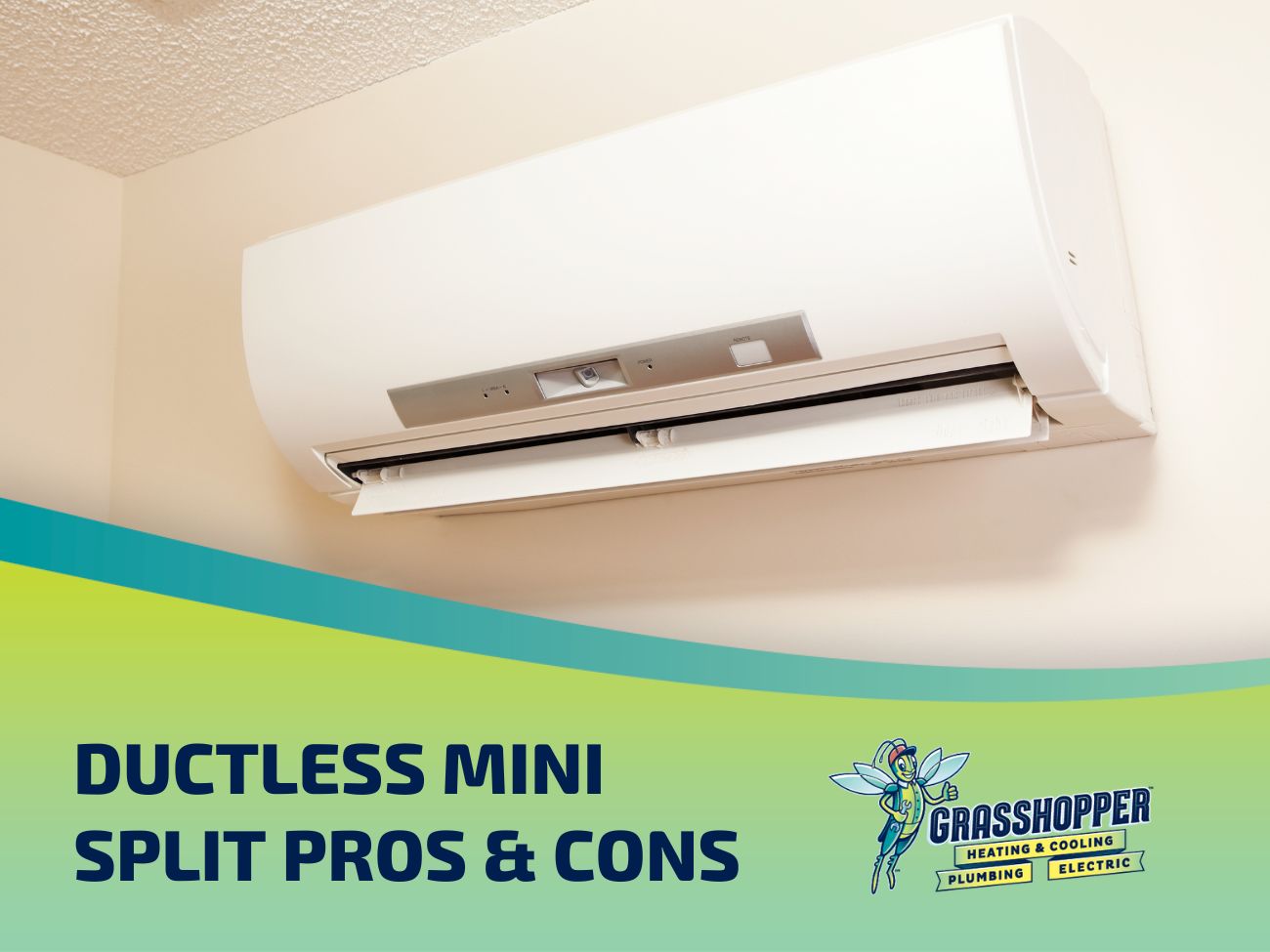
Ductless mini split systems are superior cooling solutions for homes that don’t have existing ventilation. While a central air conditioner requires ducts to distribute the air, ductless air conditioners don’t.

They give homes access to cool air without the significant expense of installing ductwork. Some models can act like heat pumps, providing both supplemental heating and cooling.

How They Provide Air Conditioning

Ductless systems work similarly to a traditional HVAC unit. They still have both indoor and outdoor units connected by refrigerant tubing. The refrigerant absorbs and transfers air.

However, unlike traditional HVAC systems, the indoor air handling unit blows directly into a room rather than through air ducts. Most indoor units can help multiple rooms reach your desired indoor temperature.

They also have other similar pieces like:

  • Suction tubing
  • Condensate drain
  • Electrical components
  • Power cables

These commonalities make them easy to fix.

The Advantages of a Mini Split AC

What are the benefits of ductless mini splits? Compared to central air conditioners, mini split systems offer the following advantages.

A Mini Split Has Lower Energy Consumption

Would you love to save money on your electric bill? Mini split systems have improved energy efficiency, so homeowners can stop wasting energy.

How does the device improve energy savings? Because the air doesn’t travel through ductwork, it better maintains its cool temperature. The mini split AC won’t run as long to reach the temperature on the thermostat.

Homeowners Enjoy Flexible Heating and Cooling

Mini split systems allow homeowners more nuanced control over the temperature throughout the property. You can connect several indoor units to the outdoor units and create zones throughout the house. If one person likes their bedroom at 71 degrees and another prefers 68, both can have what they want.

This leads to enhanced indoor air quality and comfort. With multiple devices filtering air, controlling humidity, and moderating the temperature, the home feels perfect.

The System Provides Increased Environmental Friendliness

Because they run efficiently and provide flexible control, ductless mini split systems are more eco-friendly than most air conditioners. For example, homeowners don’t increase their carbon footprint by cooling rooms people aren’t using. Mini split systems are the perfect fit for environmentally conscious families.

Families Appreciate Its Compatibility With New Technology

Mini split systems can support integration with smart technology and other accessories. For example, including a multi-stage filtration system further improves the home’s air quality. Add a remote control, mobile integration, and a programmable thermostat so you can adjust the settings while away from home.

Caring for Your Cooling Systems

Do you want to optimize the benefits of ductless mini splits? Use the following habits to help it last longer.

Don’t Ignore Annual Maintenance

All air conditioning systems require yearly maintenance. During the appointment, the technician will inspect the system’s outdoor and indoor units to ensure they are operating in peak condition.

Scheduling this tune-up yields the following advantages:

  • Maintains lower energy bills
  • Reduces the cost and frequency of repairs
  • Increases life expectancy
  • Keep air pollution-free and cool

Investing in preventive maintenance always saves money in the long term.

Schedule Prompt Repairs Instead of Delaying

Many homeowners think they can delay repairs for a broken air conditioner that still runs and save a little money. However, this is a myth, and it always costs them more in the future.

When ignored, minor repairs always turn into major issues. It also means the device won’t last as long. Invest in solutions the moment a problem arises.

Set the Thermostat to the Most Efficient Temperature

The more mini split systems run, the faster they wear out. The United States Department of Energy suggests keeping the temperature at 78 degrees in the summer. To stay cool without the mini split AC running constantly, run fans, wear moisture-wicking clothing, and drink cool beverages.

Call for Ductless Air Conditioning System Service Today

Now that you understand the benefits of ductless mini splits, reach out to Grasshopper Heating, Cooling, Plumbing & Electrical. We’re HVAC system experts and keep every home safe and comfortable. Ask how we can increase energy efficiency or repair your single outdoor unit.

Book an appointment by calling (518) 545-3271.

When Should I Schedule AC Maintenance for My Capital District, NY, Home?

When Should I Schedule AC Maintenance for My Capital District, NY, Home?

Deciding when to schedule AC maintenance might feel like a difficult task. After all, if your air conditioner is running perfectly at your Capital District, NY, home, why bother with a maintenance call? Our inspections can catch problems before they lead to a breakdown, ensuring you stay cool and comfortable all summer.

Our AC system technicians recommend annual air conditioning unit tune-ups performed in spring. Learn more about why yearly maintenance checks are important and why spring is the best time to do them.

Scheduling Maintenance for Your Central Air Conditioning System

Even if the unit cooled your home successfully last summer, it could have underlying problems that might result in a summertime HVAC breakdown at the hottest time of the year. It’s better to catch any issues before you need your AC unit to run daily during the summer heat.

Our maintenance team will do a visual inspection of the air conditioning system, looking for loose or damaged parts. We’ll run a diagnostic test to measure performance. Some issues with the air compressor or thermostat may not be obvious but will show up during testing.

We may find some parts that are close to wearing out. We can replace them preemptively, ensuring they don’t cause a breakdown in the middle of the hottest summer months. Spring is the best time to schedule preventive maintenance because many HVAC companies are not as busy.

Staying ahead of potential malfunctioning parts ensures your cooling system is ready to operate whenever you need it. We can give you priority service when you schedule annual maintenance.

Frequently Asked Question: What is included in an air conditioning maintenance service?

Why We Recommend Doing HVAC Maintenance in Spring Instead of Other Times of the Year

When you are ready to schedule AC maintenance, set up a spring appointment. Should the unit have suffered any damage during winter’s freezing temperatures, we can spot these problems right away.

Most of the time, Capital District, NY, has mild temperatures in the spring so homeowners and business owners won’t need to run their air conditioners during these months. By tuning up the AC unit before it needs to run regularly in summer, you’ll receive better energy efficiency which will save you money on your cooling bills.

Doing Air Conditioning Maintenance Doesn’t Work Better in Summer

Some might think it’s better to wait until the air conditioner runs regularly for a month or so to make it easier to catch parts that are close to breaking down.

However, waiting until summer has already begun increases the chance of a breakdown occurring before our HVAC technicians arrive. If we need to make repairs, it might take longer in summer since it is the busiest time of the year for our air conditioner repair technicians.

You don’t want to let damage and other wintertime AC worries continue to linger into summer. What might start as a simple repair job could worsen significantly if the AC unit runs for several weeks before fixing it.

For these reasons, spring is always the best option for when to schedule AC maintenance.

How Long Does an Air Conditioner Maintenance Tune-up Take?

As long as we don’t find any parts that need repair, we can complete standard air conditioner servicing within a couple of hours. Any repairs we make usually go faster than normal because we have the HVAC system already open during maintenance.

What Steps Can I Take Between Routine Maintenance Visits?

Cleaning or replacing your system’s air filter is a job most homeowners can do on their own for the heating and cooling system. You should change the filter every two to three months throughout the year. A buildup of debris on the air filter will limit the performance of both the heating system and the AC unit.

Remove weeds, trees, or bushes growing near the outdoor unit of the installed central air conditioning system. A properly functioning exterior unit needs free space so air can move across it.

Reach Out for AC Service From the Experts at Grasshopper Heating, Cooling, Plumbing & Electrical

Rather than worrying about when to schedule AC maintenance, let our expert technicians at Grasshopper Heating, Cooling, Plumbing & Electrical help. We can set up regular maintenance checkups for spring each year, simplifying the process for you.

If our air conditioning technicians find any AC problem that needs repair, we’ll give you a transparent cost estimate before we start working. To schedule an appointment in the Capital District, NY, region, call us today at (518) 545-3271 or contact us online.

What Is Included in AC Maintenance Service

What Is Included in AC Maintenance Service in Capital District?

Do you know what is included in AC maintenance? If you’re unfamiliar with the service, Grasshopper Heating, Cooling, Plumbing & Electrical can help you understand why it’s so important. Keep reading to understand why we encourage every homeowner to schedule AC maintenance at least once a year.

The Most Popular Maintenance Tasks for an Air Conditioning System

During the annual maintenance checkup for an air conditioning system, qualified HVAC technicians perform various tasks. The process usually doesn’t require much more than simple tweaks and minor repairs.

Cleaning Dirt Buildup on Air Filters

Homeowners should change their air filters at least once a month. However, families with any of the following should replace filters more frequently:

As part of their professional AC maintenance services, the worker will change the filter. They may suggest upgrading to a more powerful product if they think you could benefit from it.

Checking the Evaporator and Condenser Coils

A thorough inspection should always include the condenser (outdoor unit) and evaporator coil (indoor unit). These components help dissipate heat and distribute cool air into the ventilation. If they build up dirt or experience damage, homeowners will feel lukewarm or hot air blowing throughout the home.

During the AC inspection, the technician will inspect them for damage. They’ll also clean off any dirt and clear away any debris.

Addressing Problems With Refrigerant Levels

What is included in AC maintenance services? Finding and fixing problems with refrigerant levels is one of the most common tasks. Without adequate levels of the chemical, AC units and heat pumps can’t work.

During professional ac maintenance, the technician will ensure the device meets the manufacturer’s specifications for refrigerant levels. If they find it’s low, they’ll add more.

Lubricating Moving Parts

Like any network of mechanical pieces, the components in an AC unit can start rubbing together. One important aspect of HVAC maintenance is adding lubrication.

For example, when the system’s fan starts grinding, it makes the disturbing sound of metal on metal, necessitating AC repairs. By investing in simple preventative maintenance, the problem won’t progress this far.

Tightening Loose Electrical Connections

A heating and cooling system contains various electrical connections. Because the device vibrates as it works, its electrical wiring can grow loose. Regular maintenance ensures the air conditioner maintains tight connections so it won’t shut down at the worst moment.

The Importance of Scheduling Regular Air Conditioner Checkups

Schedule a proper maintenance appointment for an AC unit in late spring to put it in peak condition for the cooling season.

An AC Tune-Up Helps the System Last Longer

Now that you know what is included in AC maintenance, you can understand how it helps the HVAC system last longer. An air conditioner should last between 12 and 15 years, and replacing it requires a major investment. By keeping everything in peak condition, homeowners delay this expense.

Making Minor Adjustments Prevents More Costly Repairs

Scheduling professional maintenance for AC systems reduces the frequency and severity of repairs. When wear and tear goes unchecked, things break more frequently. Being proactive with maintenance will cost you less in the long term.

Running at Peak Efficiency Maintains Lower Energy Bills

When a device ages and experiences wear and tear, it uses more electricity to cool a home and you’ll see a significant rise in energy bills.

When a professional technician provides routine maintenance, they reduce wear and tear and keep the device in peak condition. The small expense of the appointment is nothing compared to the savings from reduced cooling costs.

An HVAC Contractor Improves Comfort

Over time, AC systems struggle to provide optimal comfort. Homeowners may experience reduced airflow, increased allergy symptoms, and warmer and more humid temperatures.

An HVAC company helps a home’s AC unit stay in peak condition. Your home will remain a place of rest and a sanctuary that makes weathering the hot and humid summers easier.

Air Conditioning Maintenance Helps Avoid Safety Concerns

While an air conditioner doesn’t contain as many safety devices as a furnace, keep it properly maintained to avoid concerns. For example, a refrigerant is a toxic substance that can cause long-term health complications. Avoiding problems protects everyone’s health.

Start Caring for Your Cooling System Today

If you’re wondering what is included in AC maintenance, Grasshopper Heating, Cooling, Plumbing & Electrical uses an extensive checklist. We provide a membership maintenance plan to increase the value of your investment. Our customers love our consistently professional service and our dedication to their satisfaction.

To schedule service, call (518) 545-3271.

Why Winter HVAC Inspections Are Essential

As temperatures drop and your heating system kicks into high gear, you might wonder if your HVAC system is ready for the demands of winter. Even in regions with mild winters, your heating system works overtime to keep your home comfortable and warm.

At Grasshopper Heating, Cooling, Plumbing & Electrical, we understand the role of preventive maintenance in keeping your HVAC system running efficiently throughout the cold season. In this guide, we’ll explain why winter HVAC inspections are essential, what they include, and their financial benefits.

Winter HVAC Safety Concerns and Their Impact on System Efficiency

Your heating system becomes your home’s lifeline during winter months. A properly maintained HVAC system not only ensures your comfort but also protects your family’s safety. Regular winter inspections help identify potential hazards like carbon monoxide leaks, electrical issues, or worn components that could lead to system failure.

Professional technicians examine critical components during a winter inspection:

  • Heat exchanger integrity and combustion efficiency
  • Electrical connections and safety controls
  • Ventilation systems and air quality monitors
  • Gas line connections and pressure readings
  • Thermostat calibration and programming

These inspections also boost your system’s efficiency. When components are clean and properly adjusted, your heating system requires less energy to maintain comfortable temperatures. This translates directly into lower utility bills and reduced environmental impact.

How Regular HVAC Maintenance Helps Boost Heater Productivity and Longevity

Just as your car needs regular maintenance to run reliably, your HVAC system requires consistent professional care. System reliability depends on fixing small issues before they turn into major problems. By scheduling winter HVAC inspections, you’ll protect your system from premature wear and extend its lifespan.

Invest in regular maintenance and you’ll protect your HVAC system from unnecessary strain. A complete winter inspection includes:

  • Cleaning or replacing air filters to improve airflow
  • Lubricating moving parts to prevent wear
  • Testing and calibrating system controls
  • Checking and tightening electrical connections
  • Inspecting ductwork for leaks and damage

Long-Term Financial Benefits of Winter HVAC Inspections

Smart homeowners recognize that preventive HVAC maintenance saves money in multiple ways. Beyond the obvious energy savings from improved efficiency, regular inspections help you avoid costly emergency repairs during the coldest days of winter.

Studies show that properly maintained HVAC systems consume up to 25% less energy than neglected units, potentially saving hundreds of dollars annually on heating costs. Additionally, addressing minor repairs during scheduled maintenance costs significantly less than emergency service calls.

Most manufacturers require proof of regular maintenance to maintain warranty coverage. Without documented inspections, you could face denied warranty claims for major component failures. The small investment in winter inspections protects both your equipment warranty and your budget from unexpected repairs.

Trust Grasshopper Heating, Cooling, Plumbing & Electrical for Reliable Winter HVAC Inspections

Now that you understand why winter HVAC inspections are essential, take action before issues develop. Avoid costly emergency repairs and ensure reliable heating when you need it the most. 

Call Grasshopper Heating, Cooling, Plumbing & Electrical today at 518-216-0051 to schedule your winter HVAC inspection in Clifton Park, New York, and ensure your system runs reliably all season long. Our trained technicians deliver comprehensive heating system inspections that protect your comfort and investment.

Why your furnace smells

SOLVED! 6 Reasons Why Your Furnace Smells & What It Means

Understanding Furnace Odors and Their Causes

If you’ve ever noticed an unusual smell coming from your furnace, you’re not alone. Furnace odors can range from harmless to hazardous, and understanding what these smells mean is critical for maintaining a safe and efficient home heating system. Below, we’ll break down common furnace odors, their potential causes, and the appropriate steps to address them.

1. Furnace Smells Like Burning

When you first turn on your furnace in the fall, you might notice a burning smell. This is typically caused by dust and debris that accumulate on the furnace’s components during the offseason. As the furnace heats up, this material burns off, releasing an odor through the ductwork.

What to Do:

  • Allow the furnace to run for a few hours. The smell should dissipate on its own.
  • To prevent this odor, schedule a cleaning of your furnace and evaporator coil before the heating season begins.

However, if the burning smell persists or changes to a metallic or electrical burning odor, it could signal overheating furnace components or frayed wiring. In such cases, shut off your furnace immediately and contact a professional HVAC technician. Ignoring these signs can increase the risk of a house fire.

2. Furnace Smells Like Gas or Rotten Eggs

A gas or rotten egg smell is a clear warning sign of a natural gas leak. Gas companies add a sulfur-like odor to natural gas for easy detection.

Immediate Steps:

  1. Turn off your gas supply using the shutoff valve if it’s safe to do so.
  2. Leave your home immediately.
  3. Call 911 and your gas company to report the leak.

Symptoms of natural gas exposure include headaches, dizziness, nausea, and breathing difficulties. Seek medical attention immediately if you experience any of these symptoms.

In rare cases, a rotten egg smell could be caused by issues with nearby sewer lines, such as a dry sewer trap. Pouring water down your floor drain can often resolve this issue. If the smell persists, contact a professional plumber.


Helpful resources: Report a Gas Emergency (National Grid) | Natural Gas Safety (NYSEG)


3. Furnace Smells Like Dust

A dusty smell is common and usually stems from dust accumulation in the air filter, air ducts, or furnace during the cooling season.

What to Do:

  • Replace or clean your air filter regularly—every three to six months, depending on the type of filter.
  • Consider professional duct cleaning if dust buildup is excessive.

Dirty filters restrict airflow, reducing your furnace’s efficiency and increasing heating costs.

4. Furnace Doesn’t Smell but Carbon Monoxide Detector is Going Off

A silent but deadly problem can occur if your carbon monoxide detector activates, even without a noticeable smell. This often indicates a cracked heat exchanger, a crucial furnace component that vents dangerous gases.

Signs of a Cracked Heat Exchanger:

  • A sweet or formaldehyde-like smell may occasionally accompany carbon monoxide leaks.

Why Heat Exchangers Fail:

  • Incorrectly sized furnaces causing excessive stress.
  • Frequent short cycling, leading to rapid heating and cooling of the metal.
  • Clogged air filters that cause overheating.
  • Lack of regular maintenance.

What to Do:

  • Turn off the furnace immediately and ventilate your home.
  • Contact a professional HVAC technician to inspect and repair your system.

Regular furnace maintenance and functional carbon monoxide detectors are critical to preventing this life-threatening hazard.

Suggested reading: Exploring Heat Exchangers: How They Work and Why They’re Essential

5. Furnace Smells Damp or Musty

A musty or damp smell often indicates water has seeped into your furnace. This can happen due to a loose hose connection or issues with the furnace’s drain pan.

What to Do:

  • Check for loose connections and clean up any visible water.
  • If the smell persists, consult a professional technician for HVAC repair.

Persistent dampness can lead to mold growth, which can harm indoor air quality and exacerbate respiratory issues.

Why Does My Furnace Smell? Understanding Furnace Odors and Their Causes

If you’ve ever noticed an unusual smell coming from your furnace, you’re not alone. Furnace odors can range from harmless to hazardous, and understanding what these smells mean is critical for maintaining a safe and efficient home heating system. Below, we’ll break down common furnace odors, their potential causes, and the appropriate steps to address them.

6. Furnace Smells Like Car Exhaust

A car exhaust smell may suggest problems with your furnace’s venting system. Furnaces vent gases like carbon monoxide through a pipe, and any obstruction can cause these gases to back up into your home.

Steps to Take:

  • Inspect the vent pipe for blockages like snow, ice, or bird nests.
  • For high-efficiency furnaces, ensure PVC pipes are clear of debris.

If you’re unsure, always consult a heating professional to inspect and clear the venting system.

Conclusion & Next Steps

Furnace odors can be alarming, but many are preventable with proper care and maintenance. By recognizing the signs and taking appropriate action, you can ensure a safe, efficient, and odor-free heating system for your home. Always prioritize safety and consult professionals when in doubt. If you need a trusted HVAC expert to come take a look, contact the pros at Grasshopper Heating, Cooling, Plumbing & Electrical.