Rated: 4.9 / 5 based on 2,600+ reviews. Read our reviews

Available 24/7! Call now to schedule! (518) 545-3271

Author: Amanda Triolo

Detecting and Repairing Plumbing Issues in Your Home

The last thing you want to deal with as a homeowner is an unexpected and inconvenient plumbing problem. From burst pipes to clogged toilets and leaky faucets, a lot of things can go wrong with your plumbing system. Plumbing issues can vary widely in terms of severity. But you always want to detect them as soon as possible.

A minor problem that you ignore can quickly turn into a major issue. So, how can you detect plumbing problems, and what should you do next? We’ll explain everything you need to know.

How Can You Find Plumbing Problems in Your Home

Problems like a burst pipe leaking water all around your home are obvious. But other plumbing issues aren’t as apparent. The key to minimizing water damage is catching and fixing the problem as early as possible.

How? Here are a few tips for finding potential problems in your plumbing system before they have a chance to become something worse.

Keep an Eye on Your Monthly Water Bill

Your water bill could tell you if there’s a problem. You should check it every month and keep an eye out for any unexplained or drastic increases. An increase in your water bill points to an increase in the amount of water your different plumbing fixtures use. So, if your bill increases without a change in water usage, it could mean that you have a leak somewhere in your plumbing system.

Look Out for Any Slow or Clogged Drains

Slow drains can be annoying and a sign that something is clogging your plumbing pipes. You can fix this issue without professional help in some cases. For instance, if you just have one slow-draining sink, you can fix the leak by removing the drain cover and pulling out the clog.

However, the clog is likely somewhere deep within your plumbing system if you have multiple slow-draining fixtures throughout your house. Only a professional plumber can safely and effectively remove this type of clog.

How Do Professional Plumbers Detect and Fix Different Kinds of Plumbing Issues in Your Home?

The above tips can help you detect common plumbing problems early. But you’ll still need a professional to find the actual location of the issue and provide a reliable solution. Professional plumbers use a lot of innovative equipment to inspect plumbing systems.

For example, sewer camera inspections provide an in-depth look at your pipes. Meanwhile, hydrojetting uses highly pressurized water to clear away deep, stubborn clogs without damaging your plumbing system. Professional plumbers also know what repairs to deliver so that you get a long-lasting and reliable solution that restores your plumbing system.

Get the Plumbing Repairs You Need By Reaching Out to Grasshopper Heating, Cooling, Plumbing & Electrical Today

Are you dealing with a clogged drain or sump pump failure? Is your water bill a lot higher this month, and you’re not sure why? Need a plumber that you can trust?

No matter what plumbing issues you’re dealing with, we’ve got your back. Call (518) 240-3807 today to schedule a plumbing inspection with Grasshopper Heating, Cooling, Plumbing & Electrical! Trust us to help.

8 Common Summer Plumbing Problems

You might be ready to enjoy endless carefree summer days, but plumbing problems don’t care what season it is. While you might not have to worry about frozen pipes bursting during the summer, there are other issues that often appear at this time of year.

Here, we highlight some of the most common summer plumbing repairs and how summer plumbing maintenance can help you avoid issues that need professional attention.

Seasonal Plumbing Issues Local Homeowners Face

Chances are your home’s plumbing system sees more use (and wear and tear) during the summer when the kids are out of school, you have more family gatherings, and you spend more time outdoors and use more water. While anything can go wrong at any time, it’s more likely that you’ll need the following plumbing repairs during summer:

1. Clogged Toilets

Toilet clogs top the list of common summer plumbing repairs since it’s likely your toilets will see more usage during this busy season. The frequent flushes can put more pressure on internal components, and when you have large parties, there’s a greater chance that guests will cause clogs. Not to mention, summer heat and humidity can speed up corrosion and mineral accumulation in the toilet pipes, resulting in clogs and leaks.

2. Sewer Backups

As with toilets, extra usage can cause sewer clogs and backups. Heavy summer rains can also overload the sewer lines and cause a backup into your home. Arrange a professional inspection and sewer line cleaning at the beginning of the summer to ensure the pipes are clear and you won’t have any problems.

3. Washing Machine Troubles

Summer vacation often means more laundry, and your washing machine has to work hard to keep up with all the extra dirty clothes, beach towels, and swimsuits. All this extra wear and tear can weaken the hoses, seals, and hinges, and clogs are always a risk. Keep an eye on the machine and call a plumber for help if you notice excessive vibrations, strange noises, or drainage issues.

4. Slow and Clogged Drains

Slow and clogged drains are common plumbing problems in summer because there’s a greater chance that your family will send things down the drain that don’t belong there. Rinsing off the excess dirt and sand after a day outside, for example, can block the drains. Food waste, fats, grease, oil, and hair can all stick to the pipe walls and cause clogs, so use drain traps to stop them.

5. Dishwasher and Garbage Disposal Problems

Dishwashers and garbage disposal problems frequently require warm weather plumbing repairs, usually due to clogs. Overloading the dishwasher and not adequately scraping food debris off the dirty dishes is the most common cause of dishwasher clogs, while grease and large food waste lead to disposal malfunctions. Only put as many dishes as the washer can handle into any load, scrape food waste into the trash, and never pour grease down the drain.

6. Sump Pump Malfunctions

If you have a sump pump to keep your basement dry, a heavy rainstorm can cause flooding if the device malfunctions. Sump pump malfunctions are common summer plumbing problems, usually due to a lack of maintenance. Allowing dirt and debris to accumulate around the pump and power failures are the most frequent issues, but you can avoid them with maintenance and testing.

7. Sprinkler System Issues

Plumbers often have to respond to problems with sprinkler systems in the summer. Leaks, damaged sprinkler heads, timer malfunctions, and water pressure fluctuations can all affect the lawn irrigation system and potentially damage your home or send water bills skyrocketing. Professional maintenance, including properly winterizing the system at the end of summer, can keep this from happening.


For additional assistance with lawn irrigation, lawn care maintenance, outdoor pest control needs, or other lawn care services we highly recommend our friends over at Groundhogs Lawn Care!


8. Faucet and Pipe Leaks

Leaks can happen any time of year, and summer is no exception. Metal pipes and fittings expand and contract in the heat, and humidity can speed up corrosion and cause leaks.

Proactively addressing these common summer plumbing repairs is the best way to prevent expensive damage. If you hear running water or dripping sounds, notice water stains or moisture around fixtures, or experience a sudden increase in water bills, call a plumber for repairs.

Call Grasshopper Heating, Cooling, Plumbing & Electrical for Summer Plumbing Solutions You Can Trust

Watching for plumbing problems and taking care of them quickly is the best way to prevent damage and inconveniences that dampen your summer fun. Turn to the plumbers at Grasshopper Heating, Cooling, Plumbing & Electrical in Clifton Park, NY for fast and common summer plumbing repairs. Call (518) 240-9889 to make an appointment.

Do Liquid Drain Cleaners Damage Pipes?

When a sink or shower drain develops a clog, your first thought might be to reach for a bottle of liquid drain cleaner to break up the blockage and get the water flowing again. However, before you do, you should be aware of the effects of liquid drain cleaners on your plumbing and your health, as you might think twice about this seemingly simple solution.

Many homeowners ask, “Do liquid drain cleaners damage pipes?” when we caution them against picking up a bottle to deal with minor clogs. Damaged pipes are just one of the many liquid drain cleaner concerns, which we’ll explain here.

How Do Liquid Drain Cleaners Work?

To understand the impact of drain cleaners on pipes, it’s important to understand how these products work.

All drain cleaners create heat to break down the blockage in the pipe so water can flow freely. There are three primary types of cleaners:

  • Caustic, which contains lye or potash that reacts with aluminum in the water to heat the blockage and speed decomposition.
  • Oxidizing, which contains bleach and nitrates that dissolve the clog.
  • Acid, which contains high amounts of hydrochloric and sulfuric acid that eat away at the hair, soap scum, and grease that make up the clog.

Although these ingredients can effectively remove some of the pipe blockage, as you might expect, the chemicals contact more than whatever is clogging the pipe. They also touch the walls of the pipes, which begs the question, “Do liquid drain cleaners damage pipes?

The Risks of Liquid Drain Cleaners

Whether your plumbing pipes are metal or PVC, there is a risk for drain cleaner pipe damage if you use commercially available products to clear clogs. Not only can the caustic chemicals eat away at the pipes, but the excess heat that they create can soften the pipes (especially PVC), putting them at risk for a leak. The longer they remain in contact with the plumbing, the greater the impact of drain cleaners on pipes.

Not only do you create the risk of pipe corrosion from drain cleaners, but the products can react with existing corrosion and cause unexpected issues. For example, the excess heat can crack the joints and seals in the plumbing and cause leaks. Drain cleaners can also damage fixtures like toilets, especially if they are old and already have deterioration or damage.

While drain cleaners can damage your pipes, they also create other risks to your family’s health and well-being, including:

  • Unpredictable chemical reactions with chemicals or substances in the pipes can create toxic fumes.
  • Environmental damage if the chemicals leach into the groundwater; even the bottle itself contains toxic residue that can harm the environment when it goes into the landfill.
  • Physical injuries due to splashback or otherwise coming in contact with the caustic chemicals; in some cases, a chemical reaction when the product contacts the clog can cause the cleaner to blow back from the pipe and cause injury.

Alternatives to Using Drain Cleaners to Eliminate Clogs

Given that the answer to “Do liquid drain cleaners damage pipes?” is “yes,” what can you do to deal with pesky clogs that doesn’t involve as much risk to your plumbing or health?

The easiest and safest way is to use a plunger, which puts additional water pressure on a clog to change its shape so it can flow freely down the pipes. A drain snake or pipe auger is another option for breaking up the clog and removing it.

If these methods don’t work, or you have repeated stubborn clogs, get help from a professional plumber. A professional drain cleaning ensures complete clog removal the first time, without damaging the pipes or putting anyone at risk.

Relying on a plumber instead of a bottle of harmful drain cleaner means not having to deal with bigger, messier, and more expensive plumbing issues in the future. A plumber can also help you figure out what’s causing the repeated clogs and find ways to avoid them.

Call Grasshopper Heating, Cooling, Plumbing & Electrical for Help with Clogs and Other Plumbing Concerns

The next time you have a clogged sink and think about picking up a bottle of drain cleaner to clear it, remember that if you were to ask a plumber, “Do liquid drain cleaners damage pipes?” they would say, “Yes.” Unless you want to cause more problems, put the bottle back on the shelf and contact Grasshopper Heating, Cooling, Plumbing & Electrical for help instead. Call (518) 545-3271 to request a plumber at any time in the Clifton Park, NY, area.

Emergency HVAC Repair: Your Guide to Handling System Breakdowns

Imagine your cozy cocoon suddenly morphing into an icebox as the heating system sputters to a halt, or your haven transforming into a sauna when the air conditioning bows out without so much as a warning. These are not just inconveniences; they signal an emergency in the heartbeat of your home—your HVAC system.

Navigating the tumultuous waters of emergency HVAC repair can feel like decoding a cryptic map without a compass, but fret not. Armed with the right knowledge, you can transform from a distressed homeowner into a savvy guardian of your climate comfort.

Identifying Your HVAC Emergency: When to Call for Help

The key to weathering this storm lies in your ability to quickly identify the warning signs that scream for immediate attention. Ignoring these signs is akin to sailing into the tempest with battle-worn sails; it only magnifies the risk of substantial damage, transforming a salvageable situation into a catastrophic one.

Before you reach for the phone in a panic, it’s imperative to assess your system’s symptoms with a discerning eye. This critical evaluation serves as your compass, guiding you to make informed decisions about whether to summon professional aid or apply a temporary patch.

Recognize the Signs That Require Immediate Attention

At the heart of discerning when to call for help is recognizing the signs that demand immediate attention: the shrill cry of metal against metal, the acrid scent of overheating wires, or the utter silence when your furnace refuses to awaken in the heart of winter. These are not mere inconveniences but clarion calls for emergency intervention. No homeowner should turn a deaf ear to these ominous whispers of impending doom, for they herald a critical point where delay could spiral into disaster.

  • Complete loss of heating or cooling, transforming your home into an icebox or sauna, signals a system’s cry for urgent help.
  • Strange noises—the clanks, bangs, and whistles—become a haunting symphony indicating mechanical distress.
  • Burning smells or the unmistakable odor of gas whisper threats of danger, necessitating immediate action to avert potential tragedies.
  • Noticing ice formation on the outdoor unit during summer, or the indoor coils freezing over points to refrigerant issues or airflow obstructions.
  • The sight of water pooling around your furnace or air handler suggests a leak or a condensation issue that, left unchecked, could invite mold or structural decay.

Preparing for the HVAC Technician’s Arrival

As you find yourself standing on the precipice of an emergency HVAC repair, anticipation building with every tick of the clock, the preparation for your technician’s arrival becomes your next crucial step.

This moment is more than a mere waiting game; it’s an opportunity to streamline the repair process, ensuring that when help arrives, they can dive straight into the heart of the issue without delay. Don’t overlook the basics—verify the status of your thermostat and circuit breaker, as these can sometimes offer simple solutions or reveal larger problems.

Facilitating easy access to your HVAC system isn’t just about opening doors; it’s about ensuring a swift, unencumbered path to diagnosis and repair, paving the way for a quick return to comfort and safety.

Tips for Choosing a Reliable Emergency HVAC Service

In the labyrinth of unexpected HVAC breakdowns, equipping yourself with knowledge about reliable emergency services transforms from a mere advantage to a necessity. Embarking on the quest for the right service provider before calamity strikes is like planting a beacon of hope in an otherwise dark situation.

Seek out local HVAC heroes who stand guard around the clock, ensuring their commitment to your safety with 24/7 emergency service availability. Diving into the sea of reviews and testimonials offers a glimpse into the experiences of those who have navigated these treacherous waters before you.

Certification assures a technician’s prowess in facing down even the most daunting HVAC issues.

What to Expect During an Emergency HVAC Repair Visit

Embarking on an emergency HVAC repair journey invariably begins with the palpable tension of the unknown—what exactly went wrong, and how swiftly can normalcy be restored? As you brace yourself, the initial phase unfurls with a comprehensive assessment and diagnosis of the issue, a crucial step where the veils of uncertainty begin to lift, revealing the heart of the problem.

This clarity leads to a candid conversation about repair options and costs, providing a transparent overview that empowers you to make informed decisions aligned with your comfort and budget.

Moreover, understanding the timeframe for repair and parts availability becomes a beacon of hope, illuminating the path to resolution.

This sequence of steps, while daunting, is navigated with the expertise of your chosen professional, ensuring a journey toward restoration rather than a voyage into deeper distress.

How to Minimize Future HVAC Emergencies

As the dust settles following an emergency HVAC repair, your journey toward safeguarding your home against future breakdowns begins.

The significance of recognizing safe operation practices and interpreting the whispers of maintenance needs cannot be overstated—these are the cornerstones of preventing minor issues from escalating into full-blown emergencies.

Moreover, the foresight to undertake timely repairs and consider upgrades when necessary acts as your beacon, guiding you through the fog of potential system failures toward a horizon of uninterrupted comfort and reliability.

Understanding the Costs Associated With Emergency HVAC Repairs

Stepping into the financial landscape of emergency HVAC repair can often feel like navigating a maze without a map. Understanding how these fees are structured is crucial, as it arms you with the knowledge needed to anticipate and plan for these expenses.

Breakdown of Typical Emergency Repair Costs

Embarking on emergency HVAC repairs ushers you into a realm where understanding the financial nuances becomes as critical as the technical repair itself. The gamut of expenses spans labor, which often includes a premium for after-hours, weekend, or holiday service, and the cost of parts, which can vary significantly based on the nature of the breakdown and the specific system components affected. Navigating this landscape demands a keen awareness of these potential costs, preparing you to meet them without undue pressure on your finances.

Call the Grasshopper Experts Today!

Opting for trusted emergency HVAC services with proven track records and the necessary certifications ensures quality and reliability. Regular maintenance, attentive operation, and timely upgrades are key strategies to minimize future emergencies.

Understanding and planning for repair costs, including labor and potential after-hours charges, equip homeowners to navigate financial aspects confidently. Overall, a proactive, informed approach to emergency HVAC repairs paves the way for a swift return to comfort and normalcy while optimizing long-term system health and efficiency.

How-Is-the-Cost-of-AC-Unit-Repair-Decided

How Is the Cost of AC Unit Repair Decided?

According to Angi, the average cost for AC unit repair in 2024 was between $130 and $2,000.¹ Repairing a central air conditioner can cost up to $4,200.² Consumers are often baffled when they receive their AC repair bill. The cost of fixing an air conditioner is often high and comes unexpectedly. 

But how does an AC contractor determine the price to charge? We’ll now explain their rationale for setting repair costs. 

AC Unit Repair Cost Factors

An AC repair company has considerable overhead. And the HVAC industry isn’t known for reasonable prices (inflation isn’t helping). Nevertheless, a contractor must factor in the following when determining repair costs:

Type of Unit

Air conditioners come in different shapes and forms. The cost to fix an issue often depends on the type of unit. Common types of ACs and repair cost ranges include:

  • Central AC ($100 to $4,200)²: Common issues include drain clogs, refrigerant leaks, dirty evaporator coils, and faulty thermostats.
  • Ductless Mini-Split ($150 to $1,000): Refrigerant leaks, frozen compressor coils, and circuit board malfunctions are often issues that need to be fixed. 
  • Heat Pumps ($200 to $3,500): Faulty valves, pipe leaks, frozen coils, dirty outdoor units, and malfunctioning heat pump components are common problems.
  • Window AC ($100 to $300): Frozen coils, faulty thermostats, and compressor malfunctions are common issues a technician must address.

Labor

Labor may account for up to 50% of your AC repair bill. An initial assessment may cost between $100 and $250. Once the contractor determines the type of repair needed, they may charge a flat fee for parts and labor. Or, they may charge for parts and anywhere from $100 to $250 per hour for labor, so the length of the job has a significant impact on the cost of AC unit repair

Location

Climate and cost of living can influence what an AC contractor charges for AC repairs. The same types of repairs can differ in cost from place to place. Expect to pay more for common repairs in areas where AC is in high demand. Also, if your area’s cost of living is high, your local contractor will likely charge more. 

Emergency Repair Fees

An AC contractor must often visit during off hours to make emergency repairs. Therefore, they will charge extra. To perform work after business hours, a technician may add $40 to $80 per hour to complete the same type of repair.¹

Parts

Most AC parts are not cheap and become more expensive the older your system gets. That’s a factor in deciding the cost of AC unit repair. Some of the parts your air conditioner might need during a repair, and their average costs, are as follows¹:

  • Thermostat: $15 to $300, depending on its type and features. Installation can cost $65 to $100 per hour.
  • Thermostatic Expansion Valve: $100 to $500, which includes the process of draining refrigerant.
  • Capacitor: $100 to $500 for replacing this part that helps start the system’s motor.
  • Circuit Board: $100 to $600 to repair or replace the AC system circuit board.
  • Blower/Fan Motor: $200 to $500 to replace the condenser fan motor; $400 to $700 to replace the blower motor.
  • Evaporator/Condenser Coils: $400 to $1,500 to replace the coils, especially if they’re not maintained well.
  • Compressor: At up to $2,000, the compressor is one of the largest and most expensive AC components to replace. 
  • Ductwork Repair: Fixing ducts can cost a few hundred to up to $2,000, depending on the extent of the repairs.

Deciding the Cost of AC Unit Repair Isn’t Easy

Your local HVAC company likely has a formula for determining the cost of repairs. But there are many elements to include. In addition to those mentioned above, permit and inspection costs may be added; these can increase your repair bill by a few hundred dollars. Some AC services, such as airflow inspections and electrical checks, cost extra. Also, replacing ductwork or major HVAC components often requires obtaining a permit and paying the required fee. Contractors must pass these costs on to the customer to remain profitable.

However, AC companies often extend discounts to customers who purchase maintenance service contracts. Following tips such as changing filters regularly, keeping debris away from the AC unit, not delaying minor repairs, and replacing worn parts can also lower long-term repair costs.

Call Grasshopper Heating, Cooling, Plumbing & Electrical

We’re a leading AC repair company in Clifton Park, NY. Available 24/7, we can fix any problem and offer specials and financing to help you save. To learn more or schedule service, call (518) 545-3271 now.

Sources:

  1. https://www.angi.com/articles/how-much-hvac-repair-cost.htm 
  2. https://todayshomeowner.com/hvac/cost/ac-repair-cost/


8-Reasons-to-Consider-a-Ductless-Air-Conditioner

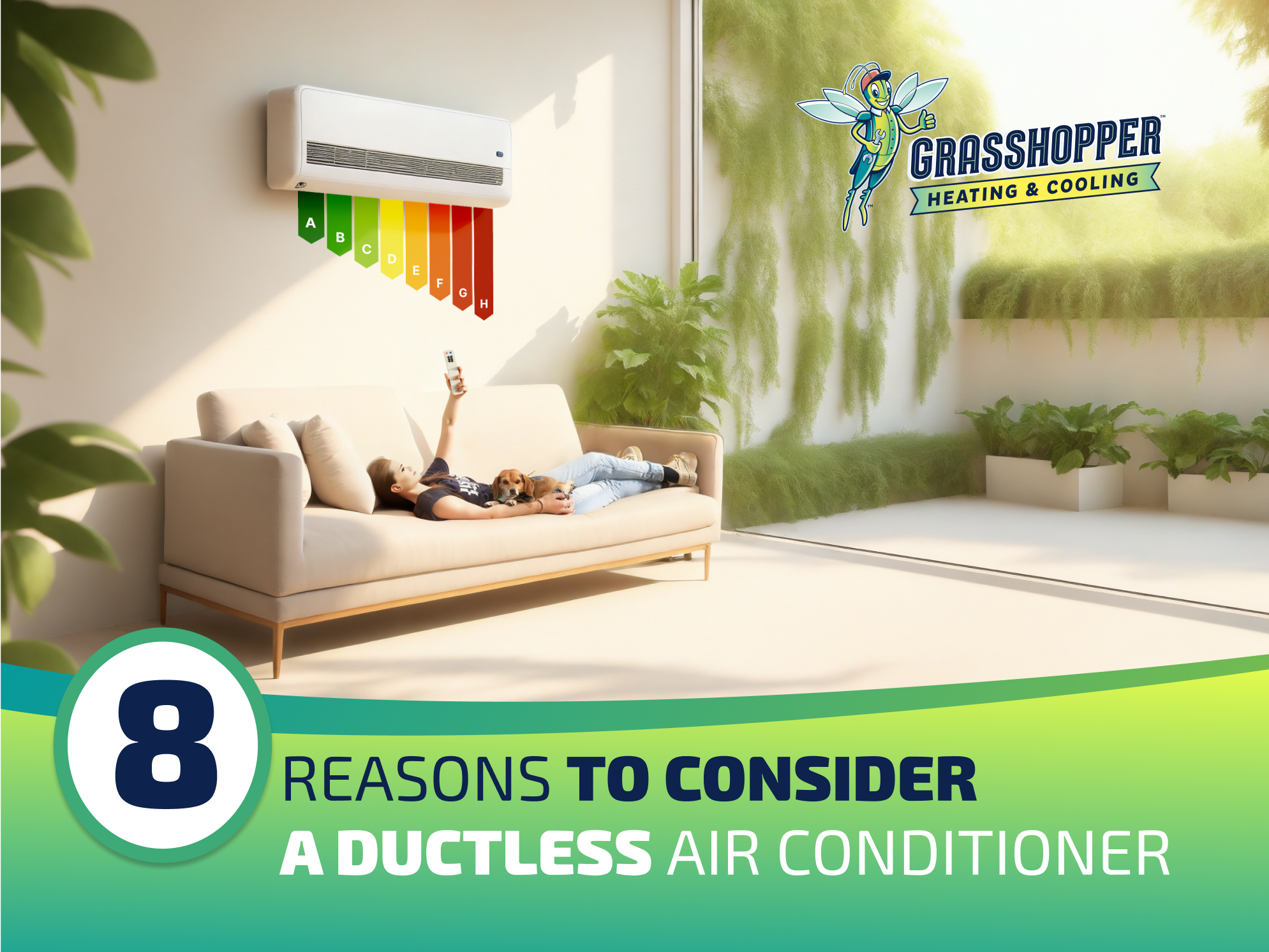
8 Reasons to Consider a Ductless Air Conditioner

By now, you’ve probably heard about or considered installing a ductless air conditioner. There are many reasons to consider installing one. Like a conventional central AC system, it has an outdoor compressor and an indoor evaporator unit and uses refrigerant to absorb and release heat. Below, we’ll explain eight reasons to consider a ductless system so you can determine if it is right for your home.

1. Hassle-Free Installation

Installing a ductless AC system is much simpler than installing a central air conditioning system. There’s no ductwork to install, which immediately reduces the time, effort, and cost of the project. It can cost half as much to install a ductless unit than a ducted one. Plus, you don’t have to tear apart the ceiling or walls. The indoor and outdoor units are connected by a conduit that requires just a 3” hole in an exterior wall, which is hidden out-of-sight behind the air handler.

In addition to the simplicity of installation, ductless air conditioners offer more flexibility. You can install three or more ductless units to control the temperature of different rooms or areas separately. This means you can turn off units you don’t need and save energy while everyone in your household can adjust the temperature to their liking.

2. Reduced Operating Costs

If you’re looking to save on your monthly utility bills, installing a ductless AC system can meet your goals. The absence of ductwork is the primary reason. Air ducts can lose a significant amount of air through gaps, holes, and tears, which wastes energy. Much of a central air conditioner’s energy consumption is taken up by it compensating for air loss from ducts.

3. Increased Efficiency

Ductless air conditioners have a higher seasonal energy efficiency ratio (SEER) than other cooling systems. A ducted system is typically rated from 12 to 16 SEER. However, a ductless system can be rated at 30 SEER or higher, meaning it is inherently much more efficient. It also contributes to a lower carbon footprint for your home, reducing environmental emissions.

4. Minimal Maintenance

There’s not much to do to keep a ductless AC in top shape. Clean or replace the air filters regularly, as recommended by the manufacturer. Also, keep shrubs, debris, and objects away from the outside unit and fan and obstructions away from indoor vents. There are fewer vents to clean and no ducts to be checked, cleaned, or sealed. Therefore, you can save significantly throughout the year.

5. Improved Indoor Air Quality

Dust and dander tend to collect in air ducts and re-circulate in your home. Invisible contaminants such as fumes, chemicals, bacteria, and viruses can also pollute your indoor air, while ductwork often harbors mold and algae as well as insects and rodents. Ductless air conditioners often use high-efficiency particulate air (HEPA) filters to block microparticles as small as 0.3 microns, but even standard filters do a good job of keeping the air clean. 

6. Compatibility with Smart Systems

Many ductless units work with smart controllers that can be operated from your smartphone. A Wi-Fi controller is a modern amenity that lets you control your AC from anywhere. It can incorporate weekly scheduling, temperature- and humidity-based triggers, and location-based controls. The controller can even track usage history and link with smart home assistants.

7. Possible Heating Capabilities

Ductless systems with heaters eliminate the need to purchase a furnace or other heating appliance. These are often called ductless heat pumps and can be reversed by changing the setting. You do not need a furnace or have to deal with its associated operating and maintenance costs. Your AC can be used every season of the year.

8. Financial Incentives

By installing a ductless air conditioner, you may be eligible for financial incentives such as rebates from your utility company. Some equipment is also eligible for a federal tax credit, so you can claim up to 30% of the project cost. You can qualify for a credit of up to $600 depending on the air conditioner and up to $2,000 for heat pumps.

Call Grasshopper Heating, Cooling, Plumbing & Electrical

Our customers in Clifton Park, Albany, and surrounding areas rely on us to install ductless air conditioning systems. These mini-split systems cut utility costs and last longer than conventional AC units. In addition, our EPA-certified technicians can clean or repair your system. To learn more and receive a free ductless air conditioner estimate and consultation, call Grasshopper Heating, Cooling, Plumbing & Electrical at (518) 241-1758.

Spring into Action: Wake Up Your AC from Winter Slumber!

As we transition into a new season and the world bursts into color, it’s time to refresh our homes too, starting with slumbering air conditioners. 

Reactivating your AC goes beyond a simple switch flip—it’s a meticulous journey to guarantee comfort, efficiency, and dependability as temperatures rise. From unclogging filters to recalibrating the thermostat, it must be done with care and precision.

Kickstart Your AC: Essential Steps for Spring Awakening

Transitioning your AC from its winter slumber to springtime readiness is a pivotal step in ensuring your home remains a sanctuary of comfort as the seasons change.

Grasshopper Heating, Cooling, Plumbing & Electrical recommends your first move is to always have a meticulous evaluation of the unit for any visible damage that may have occurred during the colder months.

With an eagle eye, delve into inspecting signs of rust, wear, or any hazard that might compromise its efficiency. Following this, great emphasis should be placed on clearing any debris, such as fallen leaves or twigs, around the outdoor unit.

This simple yet crucial step aids in maintaining unobstructed airflow, which is key to optimal performance.

Lastly, checking and tightening electrical connections is a task the professionals at Grasshopper carry out with precision.

Given the intricate dance between electricity and the machine’s components, this ensures safety and functionality, preventing any unforeseen interruptions in service.

These initial actions are a launching pad into the broader realm of AC readiness for the warmer days ahead.

Deep Cleaning Before Summer Hits

Embarking on the journey toward summer, ensuring a deep clean of your AC system becomes imperative to maintain its efficiency and extend its lifespan.

The task begins with paying close attention to the air filters—these are the first line of defense against particulates and dirt, and whether they need cleaning or replacing can make a significant difference in air quality and system performance.

Next, the focus turns to the heart of the outdoor unit, the condenser coils and fins.

These components, crucial for heat exchange, often harbor dirt and debris that can impair the system’s ability to cool your home effectively.

Lastly, the drainage system demands a thorough check.

A clogged drain line is more than a nuisance; it can lead to water damage and impact indoor humidity levels, creating a less-than-ideal indoor environment.

Each of these steps plays a foundational role in prepping your AC for the relentless heat to come, ensuring it operates smoothly, efficiently, and safely.

Clean or Replace Your Air Filters

One of the most transformative actions to take each spring involves addressing the condition of your AC’s air filters. These filters function as gatekeepers, purifying the air that circulates through your home by trapping dust, pollen, and other airborne particulates. It’s imperative to either thoroughly clean or replace these filters to ensure that the air quality in your home remains optimal and that your AC operates without unnecessary strain.

Clean the Condenser Coils and Fins

These components are instrumental in the heat exchange process and vital for cooling your home efficiently. You gently hose them down, removing layers of dirt and grime that have built up, mindful of not bending the fragile fins. This act, while seemingly minor, significantly boosts the unit’s performance by ensuring the air flows freely and the heat exchange occurs as intended.

Check the Drain Line for Blockages

Proceeding with your spring AC tune-up, shine the spotlight on the drainage system, particularly inspecting the drain line for any possible blockages. It’s a well-known fact that a clogged AC drain line not only poses the risk of water damage but can also elevate indoor humidity levels, detracting from the comfort of your home. By ensuring the drain line is clear, you are actively preventing unwanted moisture issues that could lead to mold growth or other water-related problems.

Testing the System Before Daily Use

As the sunnier days draw near and we edge closer toward a season filled with warmth and vibrant growth, ensuring your AC system transitions smoothly from the quiet of winter to the buzz of spring is imperative.

The process doesn’t just end with cleaning and physical inspection; it’s equally crucial to power up your system and give it a thorough test run before settling into a routine of daily use.

For me, this involves a few critical actions: adjusting the thermostat to cooling mode to coax the system back to life, attentively listening for any unusual noises during startup that might signal an urgent need for AC repair in spring, and closely monitoring the cooling efficiency during the initial hours of operation to confirm everything is functioning as expected.

These steps form the crux of your approach, allowing me to address potential issues early and ensure your home remains a cool haven as temperatures climb.

Setting Up Your AC for Optimal Spring Performance

Shifting into the spring season, you must fine-tune your AC’s settings for peak efficiency and comfort.

The cornerstone of this transition revolves around two pivotal actions: adjusting your thermostat settings for the spring and programming it for an energy-efficient temperature range.

This isn’t just about embracing the warmer weather; it’s about doing so smartly and sustainably.

Always aim to strike a balance between maintaining a comfortable indoor climate and optimizing energy use, ensuring that your home remains a haven of comfort without unnecessary energy consumption.

Tailoring the thermostat to spring’s unique demands, sets the stage for a season of efficient cooling, preparing your AC to respond seamlessly to the fluctuating temperatures that define this time of year.

Professional Maintenance: When to Call in the Experts

Transitioning your AC system from a dormant state to fully operational for springtime involves a series of precise steps, most of which you can handle personally.

However, recognizing when to seek professional help is crucial to guaranteeing the system’s longevity and optimal performance.

Identifying issues that might require expert intervention, scheduling a preseason maintenance check-up, and voicing any performance concerns are actions that necessitate the keen eye and skilled hands of a specialist.

Spotting Problems That Require Expert Intervention

Even with your careful inspections and diligent maintenance, there are times when issues arise that are beyond your expertise. Recognizing signs of distress in your AC unit, such as persistent unusual noises, a significant drop in cooling efficiency despite all maintenance efforts, or an unexpected spike in your energy bills, signals it’s time to call in the professionals. These are not mere quirks but potential red flags indicating deeper problems that require expert intervention.

It’s essential to understand that some AC troubles, like a coolant leak or electrical issues that lead to inconsistent cooling, are not just inconvenient but could pose serious risks if mishandled. In instances like these, you don’t hesitate to reach out for professional help. The expertise that technicians bring to the table ensures that any complex issues are accurately diagnosed and resolved. This not only safeguards your home’s comfort but also extends the life of your AC system, making professional maintenance a critical component of your springtime AC preparations.

Schedule a Preseason Maintenance Check-Up

Anticipating the shift to warmer days, prioritize scheduling a preseason maintenance check-up with a trusted HVAC professional. It’s an action that underscores your commitment to ensuring your cooling system is not merely functional but operates at peak efficiency as spring ushers in the need for consistent cooling.

This preemptive step allows a seasoned technician to scrutinize every aspect of the system, from electrical connections and refrigerant levels to the overall operational integrity. Securing a professional’s evaluation guarantees that your AC is primed for the spring and summer months, providing peace of mind and the promise of uninterrupted comfort.

Discuss Any Concerns About Your AC’s Performance

Engaging in an open dialogue with professionals about your AC’s performance is a step to never overlook. Expressing any concerns, whether they’re about strange sounds or the system struggling on hotter days, enables the technicians at Grasshopper to tailor their approach to suit your specific needs.

Maintaining Indoor Air Quality as Seasons Change

As the spring season unfolds, the attention you give to your AC system extends beyond just mechanical efficiency; you equally prioritize the quality of air circulating through your home.

With allergens like pollen at their peak, maintaining indoor air quality becomes indispensable.

To this end, consider an upgrade to a higher-efficiency air filter, integrating air purifiers into rooms most affected by allergies, and committing to a regular cleaning schedule for vents and registers throughout your house.

Your Trusted HVAC Professionals

Transitioning your AC from its winter hibernation to spring action is crucial for ensuring your home stays comfortably cool and energy-efficient as temperatures rise. The process begins with a thorough inspection of the unit for any damage or wear and the removal of debris around the outdoor unit to maintain airflow.

It’s vital to check and tighten electrical connections for safety and functionality. Deep cleaning, especially of air filters, condenser coils, fins, and the drain line, is paramount to prevent blockages and maintain efficiency.

Equally important is testing the system, adjusting the thermostat to cooling mode, and listening for unusual noises to catch potential issues early. Setting your thermostat for spring temperatures and opting for an energy-efficient range can substantially reduce energy costs.

Recognizing when to call in professionals for maintenance or issues beyond one’s expertise ensures the longevity and optimal performance of your AC unit. Overall, carefully transitioning your AC for spring guarantees not just a cool home but also a healthy, energy-efficient environment as we embrace the warmer months.

What Happens If You Neglect Heating Maintenance 

In the heart of winter in Clifton Park, NY, when snow blankets the ground and ice forms on windows, the warmth of your home becomes one of your top priorities. This season, as you enjoy the beauty of winter from the cozy indoors, you need to remember the role your heating system plays in making these moments possible. 

However, the performance and reliability of your heating system hinge on regular maintenance. Grasshopper Heating, Cooling, Plumbing & Electrical is here to share how overlooking this essential task can lead to unexpected heating issues. When you have the right knowledge, you are prepared to keep your home warm and safe throughout the coldest months. 

Understanding the Essence of Heating Maintenance 

Heating maintenance is like giving your home’s heating system a health check. This simple step makes sure it’s ready to work hard when you need it most. Think of it as a tune-up that keeps everything running smoothly, from the filters that clean the air to the furnace that warms your house. It’s best to schedule this early so that any fixes are done before the cold really bites. 

This is all about making smart choices that keep your energy bills down and extend your system’s life. Local pros, familiar with Clifton Park’s climate, can spot and solve small heating issues before they turn big, ensuring you stay cozy all winter. By keeping up with maintenance, you’re protecting your home’s safety and your peace of mind. 

Navigating Through Heating Issues 

In the depths of winter, the difference between a cozy evening and a cold night can hinge on the health of your heating system. Many homeowners might not realize that regular maintenance is the key to consistent warmth and system reliability. By understanding the common heating issues that can arise from neglect, you’re taking a proactive step toward ensuring your home remains the warm, welcoming space you cherish, even as the temperatures outside drop. 

  • Decreased Efficiency and Increased Energy Bills 
  • Frequent Breakdowns and Repairs 
  • Shortened Equipment Lifespan 
  • Safety Hazards 
  • Inconsistent Heating and Comfort Issues 

Decreased Efficiency and Increased Energy Bills 

Neglecting heating maintenance leads to a less efficient system. That, in turn, means your home uses more energy to heat every space. This inefficiency pushes your heating system to work harder, and it struggles to reach the comfort levels you’ve set. The result is an inflated energy bill. Dirty filters, along with wear and tear on burners and ductwork, obstruct the smooth operation of your heating system. The effort to push air through clogged filters or to compensate for failing parts results in substantial energy waste. Regular maintenance addresses these heating issues head-on, ensuring your system operates efficiently. That keeps your home warm and your energy bills in check without unnecessary spikes. 

Frequent Breakdowns and Repairs 

Without the preventative care of regular maintenance, heating systems are at a higher risk of experiencing breakdowns. The culprits often include worn-out components like belts and bearings or clogged filters and vents that strain the system. This not only leads to an uncomfortable chill in your home when you least expect it but also results in emergency repairs that can be costly. During the cold weather, when the demand on your heating system peaks, these problems become more pronounced. 

Keeping up with maintenance ensures that these potential heating issues are identified and addressed early, preventing inconvenient breakdowns and preserving the warmth of your home. 

Shortened Equipment Lifespan 

Neglecting regular maintenance on your heating system not only puts a strain on its efficiency but also accelerates the wear and tear of its components. This increased strain can lead to a shortened lifespan, forcing components to work harder and fail sooner than they should. For example, a furnace that might have lasted 20 years with proper care could need replacement after just 15. 

Regular maintenance serves as a form of preventative care, catching small heating issues before they become big problems, ultimately protecting your investment. By ensuring that all parts of your heating system are in good working order, you’re saving on potential future costs and ensuring that your system serves you longer and more reliably. 

Safety Hazards 

The importance of maintaining your heating system extends far beyond efficiency and lifespan; it directly impacts the safety of your home and family. A neglected heating system can become a source of dangerous pollutants, like carbon monoxide, which is odorless and colorless, making it a silent threat that can go unnoticed until it’s too late. Furthermore, systems burdened with dirt and malfunction can be prone to electrical failures or even fire hazards, posing a significant risk to your home’s safety. 

Regular maintenance isn’t just a check-up; it’s a comprehensive safety inspection that can identify and rectify potential hazards, ensuring that your home remains a haven. Ensuring your system is clean and functioning correctly reduces the risk of these dangers, providing peace of mind and a safer living environment. 

Inconsistent Heating and Comfort Issues 

One often overlooked consequence of skipping regular heating maintenance is the struggle to maintain consistent warmth throughout your home. When your heating system isn’t regularly serviced, you might find some rooms are too hot while others remain uncomfortably cold. This inconsistency is usually a sign that your system is losing its ability to distribute air evenly, often due to blocked vents, dirty filters, or failing mechanical components. 

Not only does this affect your comfort, but it also forces your heating system to work harder to compensate for these imbalances, which can further degrade its efficiency and reliability. Regular maintenance checks can identify and rectify these heating issues, ensuring your home enjoys even, comfortable heating. This improves your overall comfort and optimizes your system’s operation, making your living spaces more inviting during the cold months. 

Ready to Embrace a Warmer Winter? 

The best way to ensure a cozy and reliable heating experience this winter is by scheduling furnace maintenance with Grasshopper Heating, Cooling, Plumbing & Electrical. Serving the area of Clifton Park, NY and the surrounding areas, we’re here to help make sure your heating system is prepared to provide uninterrupted warmth and comfort. 

Contact us today to secure your peace of mind when it comes to heating issues and take the first step toward a winter defined by warmth and no worry.

10 Things to Consider Before You Install a Furnace

Cost & Financing Update: August 2026 

Furnace installation now runs close to $5,000 on average, and a high-efficiency unit can push that closer to $10,000 depending on size and equipment type, according to Forbes Home’s furnace cost research. That’s a real number to plan around, and the right decision depends on more than just the sticker price. Before you sign off on a new furnace, here’s what actually shapes the cost and the outcome.

Start With the Age and Condition of Your Current Furnace

A furnace can last 15 to 20 years, but that assumes regular filter changes and annual maintenance along the way. Heavier use and a home that demands warmer temperatures can wear a unit out faster than the average timeline suggests. The condition of your current system is often the clearest signal of what to do next: if it needs frequent service calls and a single repair would cost more than half the price of a new unit, installing a new furnace is usually the smarter move financially.

Choose the Fuel Type That Fits Your Home

Your options are gas, oil, and electric. Gas furnaces cost more upfront but tend to save money on utility bills over time and perform reliably in cold winters. Oil furnaces handle harsh winters just as well, though fuel costs run higher and they need more frequent maintenance, with the tradeoff of no carbon monoxide risk. Electric furnaces skip combustion entirely, using heating coils instead, but the cost of electricity makes them a better fit for milder climates than the Capital Region.

Get the Size and Capacity Right

Furnace size is measured in British Thermal Units, or BTUs, which reflect how much energy the unit uses to heat your home. The number you need depends on square footage and climate, with colder regions generally requiring 30 to 60 BTUs per square foot for a standard-efficiency furnace. An oversized or undersized unit runs less efficiently, wears out sooner, and never quite delivers the comfort level you’re paying for. A proper load calculation from your contractor, not a guess based on your old unit, is what gets this number right.

Check the Efficiency Rating

Annual fuel utilization efficiency, or AFUE, measures how much of the fuel a furnace burns actually turns into heat for your home. The federal minimum is 80 AFUE, and if your furnace is 15 years or older, it’s probably running well below that. To qualify for an Energy Star rating, the Energy Star furnace guidelines require at least 95 AFUE in Northern climates like ours, and the most efficient furnaces on the market now reach 98 AFUE.

Think Through Location and Ductwork

Before installation day, your contractor needs to know where the unit will go, since a furnace needs access to both an electrical outlet and a vent. A cramped installation space can restrict airflow and hurt performance, so the unit should sit in an insulated space free of drafts, away from anything flammable like paper, sawdust, or cleaning products. It’s also worth having your ductwork inspected at the same time. No matter how efficient the new furnace is, poorly sealed or dirty ducts and blocked vents will keep it from running at its rated efficiency.

Budget for the Full Cost, Not Just the Unit

Single-stage furnaces typically cost less than two-stage or modulating models, but the equipment price is only part of the picture. Labor can add thousands of dollars depending on the complexity of the job, and any gas line or electrical work needed to support the new system adds to the total. Permits and a high-efficiency programmable or smart thermostat are worth budgeting for as well. If you’re converting fuel types, expect the cost to climb further. Switching from propane to natural gas typically just requires a new gas line, which could be just a few hundred dollars, but converting from electric to gas can run $1,200 to over $10,000 depending on what your home’s infrastructure already supports.

Ask About Financing and New Technology

Financing options can spread the cost of a higher-efficiency furnace over time, which makes it easier to choose the system that actually fits your home rather than the cheapest one available. While you’re comparing options, ask about technology upgrades too. Variable-speed blower motors offer more precise comfort and lower energy costs than a standard motor, sound-reduction features like insulated cabinets and low-noise burners make some units nearly silent, and a smart thermostat can learn your schedule and let you monitor your system remotely. Finally, check the warranty terms before you buy. Heat exchangers are typically covered for 20 years, while parts like the blower motor and ignitors usually carry limited warranties of one to 10 years, and some of those terms require registering the product shortly after installation to stay valid.


Get Expert Help With Your Furnace Installation

Grasshopper Heating, Cooling, Plumbing & Electrical will evaluate your home in person and help you choose the right furnace for your budget, comfort goals, and long-term efficiency needs. Schedule a furnace installation estimate to see how our process works from evaluation to final walkthrough.

FAQs About Furnace Installation Cost

How much does furnace installation cost in 2026?

Furnace installation typically runs close to $5,000 on average, with high-efficiency units and larger homes pushing that number higher, depending on size, fuel type, and ductwork condition. A free in-home estimate gives you an exact figure rather than a broad range.

Is financing available for a new furnace?

Yes, financing options are available to help spread out the cost of a new furnace installation, which makes upgrading to a higher-efficiency unit more manageable. Ask about financing when you schedule your free estimate.

What AFUE rating should I look for in a new furnace?

Look for at least 95 AFUE if you want an Energy Star-rated furnace in the Northeast, since anything lower wastes more fuel over the life of the unit. The highest-efficiency furnaces on the market reach up to 98 AFUE.

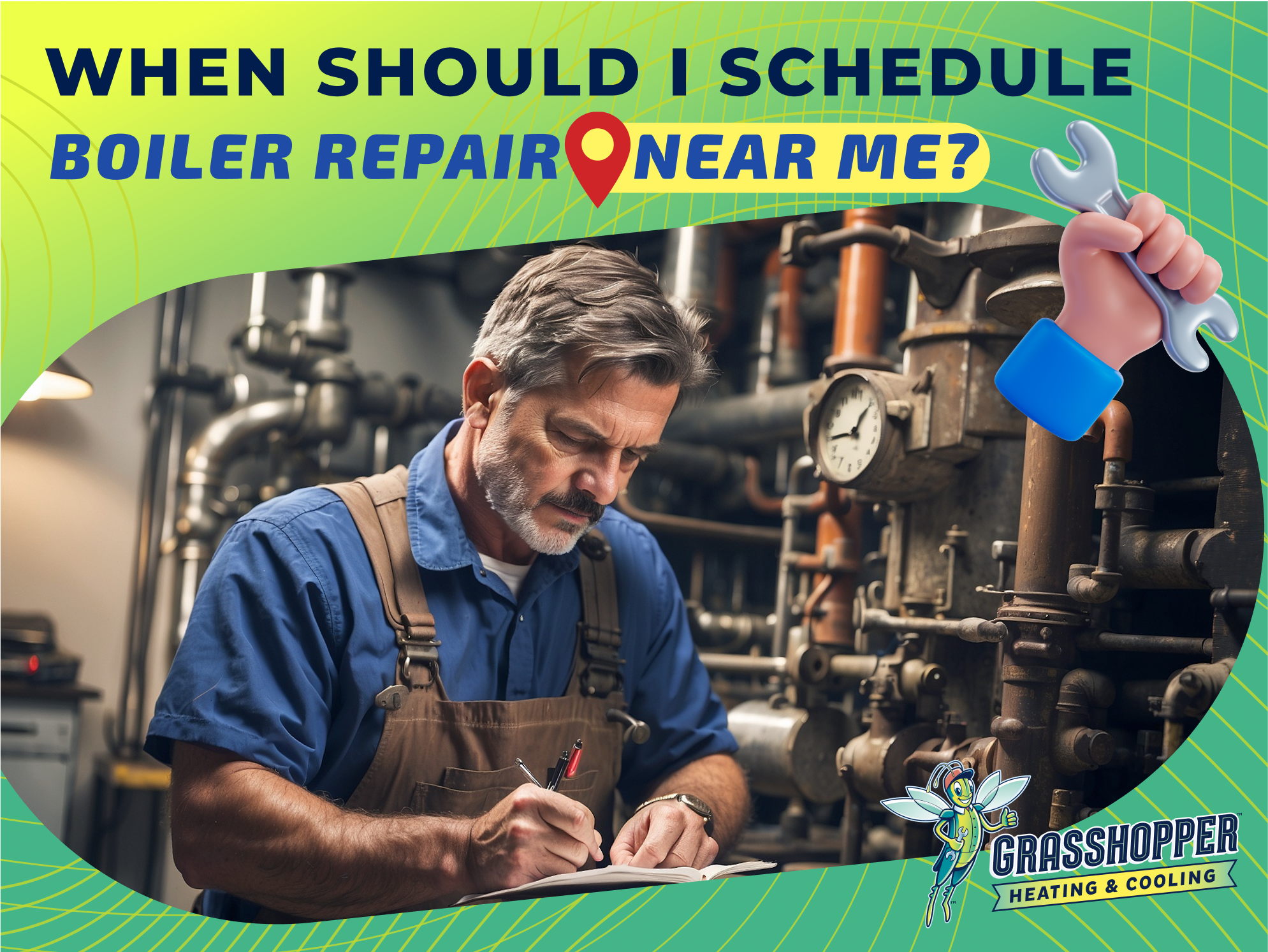
When Should I Schedule Boiler Repair Near Me?

Scheduling prompt boiler repair near Clifton Park or surrounding areas can prevent your hydronic heating system from breaking down. Since your boiler provides heating and hot water, it should be fixed quickly. Boilers operate at high temperatures and pressures, so there are also safety considerations. Call the team at Grasshopper Heating, Cooling, Plumbing & Electrical if you experience any of the issues we’ll detail in this article.

Signs You Need Boiler Repair

If you have no heat or hot water, that’s a sign your boiler isn’t working. Your home may be cold even if you set the thermostat to “Heat”. However, there are several signs your boiler may need repair or is on the brink of a complete breakdown. Call us for immediate boiler repair near you for signs such as:

  • Water Leak: Boilers contain water, so some people think a periodic leak is normal. A leak is never a good sign. Some leaks can be fixed inexpensively. However, water can spread quickly and lead to costly damage to your home. A boiler leak is often a sign of a hidden problem, such as corrosion, a damaged seal, a broken valve, or a faulty connection.
  • Strange Odor: A foul smell may occur if the boiler isn’t burning properly or if there’s bacterial growth inside it. A rotten egg smell often indicates a gas leak. If your boiler is releasing bad odors, it may also have an issue that’s potentially causing a carbon monoxide leak. 

You can’t smell carbon monoxide, but it is dangerous and often deadly, so evacuate the building and call for help. Signs of exposure include headaches, nausea, breathing problems, and loss of consciousness. 

  • Yellow Burner Flame: The pilot light should be blue. If the flame is yellow, there may be a carbon monoxide leak. Call for emergency boiler service. Also, contact your local heating repair company if the pilot light keeps going out. A gas supply issue, faulty thermocouple, or poor airflow may be the cause.
  • Loud Noise: The occasional rumbling or popping from your boiler doesn’t signify immediate danger. However, if you hear loud banging, whistling, gurgling, clunking, whirring, or other sounds, there’s a problem somewhere in the unit. The noises can be indicative of issues ranging from a bad pump or fan to low water pressure to mineral buildup. Prompt repairs can prevent a minor issue from escalating to a boiler breakdown or failure.
  • Water Isn’t Hot Enough: If the water in your home is lukewarm or not getting hot enough, the boiler’s heating element may need to be replaced. Various other problems can cause issues with water heating. Our technicians have the tools and expertise to thoroughly check the system and find and fix any issues.
  • Low Water Pressure: A sudden pressure drop can prevent your boiler from distributing heated water effectively. Low water pressure can indicate a leak, malfunctioning pressure relief valve, or bleeding radiator. If the pressure drops below a certain level, a safety cutoff switch will automatically turn the boiler off.
  • Condensation: If there’s excess condensation or the area around your boiler is suddenly damp, a heat exchanger or other problem may be the cause. Condensation around a new boiler can mean it was improperly installed.
  • Your Energy Bill Goes Up: If you have a boiler and your energy bill suddenly spikes, a professional may be able to repair it quickly. An aging boiler causing high energy bills may be near the end of its life. Call for help if your energy bills increase with no change in usage. You can prevent or delay such an issue with regular maintenance; however, wear and tear can eventually impact a boiler’s efficiency.

How Much Do Boiler Repairs Cost?

Boiler repairs generally cost a few hundred dollars. The actual cost varies depending on the type of repair or part that needs to be replaced. Major repairs can be even more expensive.

Is It Worth Repairing My Boiler?

When your boiler needs a repair, you may consider replacing it. Whether a repair is worth it depends on the frequency and cost of repairs (replace the unit if fixing it costs nearly as much as a new boiler). Also, consider the unit’s age. If your boiler is nearly 15 years old and needs a major repair, replacement is a good option.

Call Grasshopper for Boiler Repair Near You

If you live in or near Clifton Park, NY, and experience a boiler problem, contact Grasshopper Heating, Cooling, Plumbing & Electrical. We’re available 24/7 in case you have an emergency. Our certified professionals can provide any type of boiler repair or replace the unit with a high-efficiency system. To request prompt service and learn about financing and options, call (518) 252-7939 today.